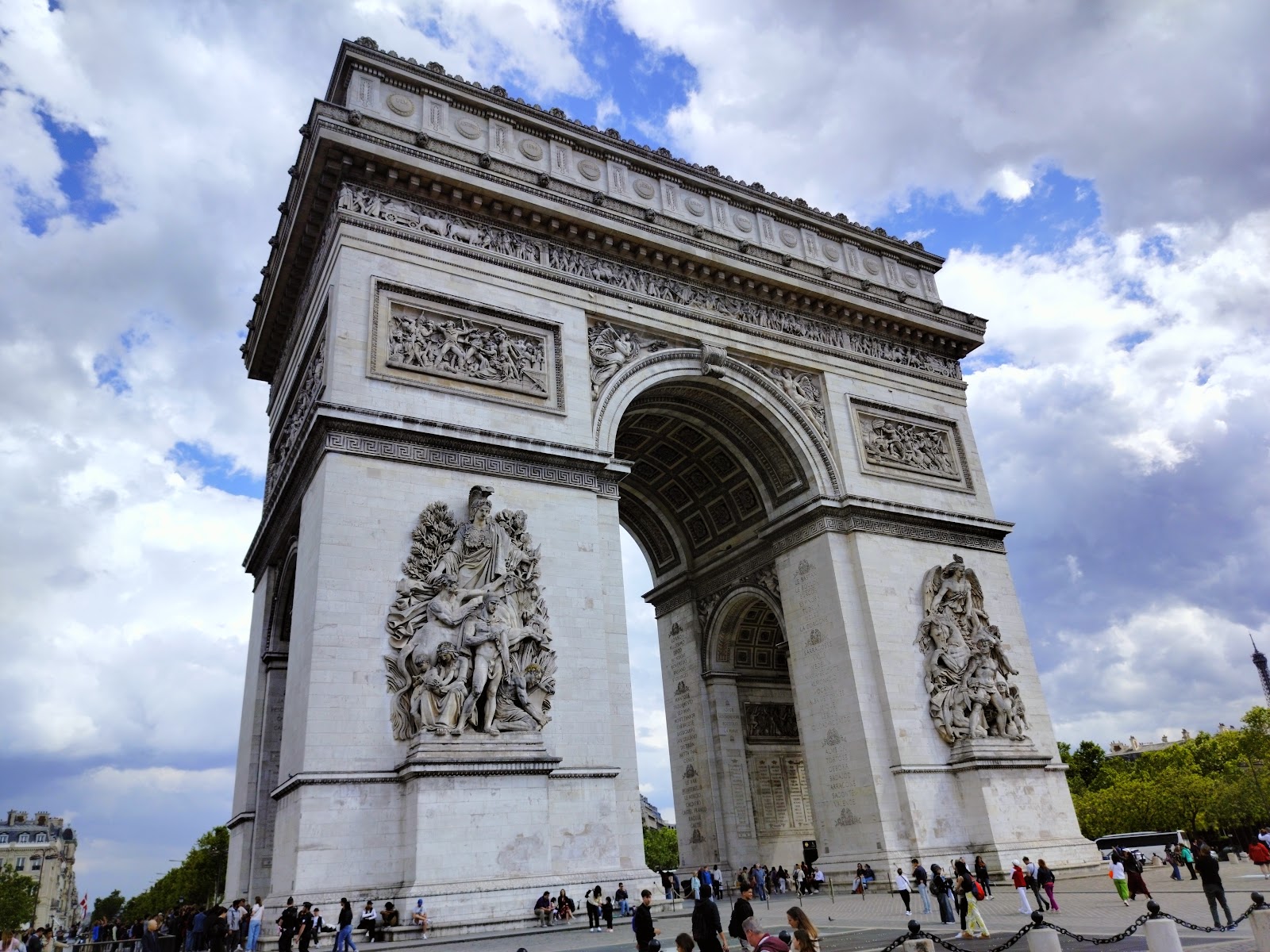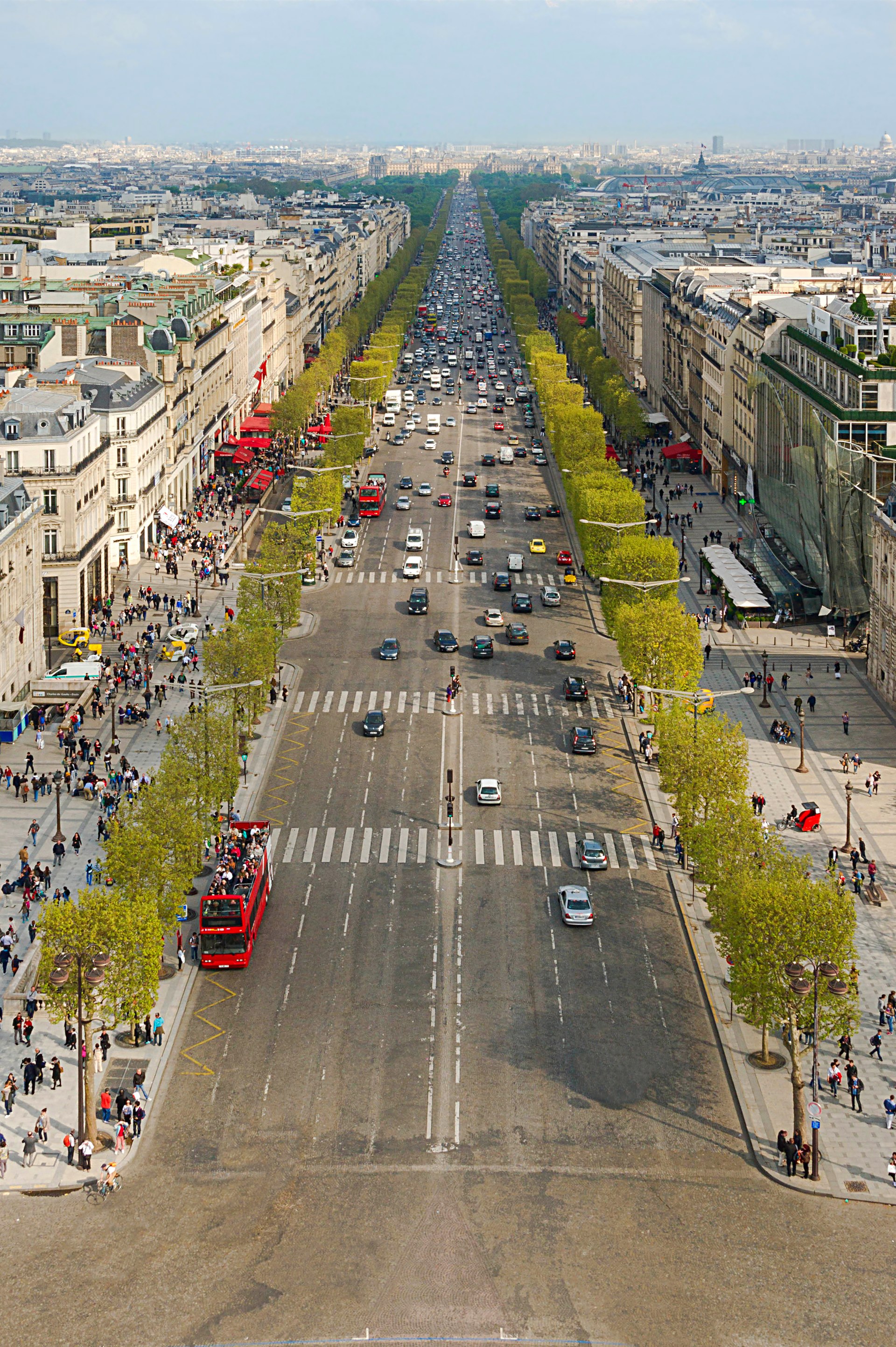
This is the Champs-Élysées — say it shahnz-eh-lee-ZAY — nearly two kilometers of avenue running straight uphill to the Arc de Triomphe, lined with double rows of plane trees. The name means the Elysian Fields — the fields of heaven. The French named a street after heaven, and the rest of the world mostly went along with it.
Which is funny, because this was a swamp. Into the sixteen hundreds, the ground under all this was soggy fields where market gardeners grew vegetables for the city. Then the king's landscape designer — the same man who did Versailles — drew a straight, tree-lined line through the cabbage fields. The point was to extend the view from the Tuileries. That's all this avenue originally was. A sight line. Paris then spent three centuries decorating it until it became the most famous street on Earth. Under Louis-Philippe, the avenue got its first gas lamps, and the king had the lampposts painted green so they'd vanish among the trees. The view was the whole point, and not
hing was allowed to interrupt it.
The avenue's real genius turned out to be theater. When France needs a stage, this is the stage. And the two most important performances ever staged here happened four years apart, pointed in opposite directions. In nineteen forty, German troops paraded down this avenue past silent, emptied sidewalks — the photographs show a conquered street. Then in August ninet