Place des Vosges

Place des Vosges

Paris, France

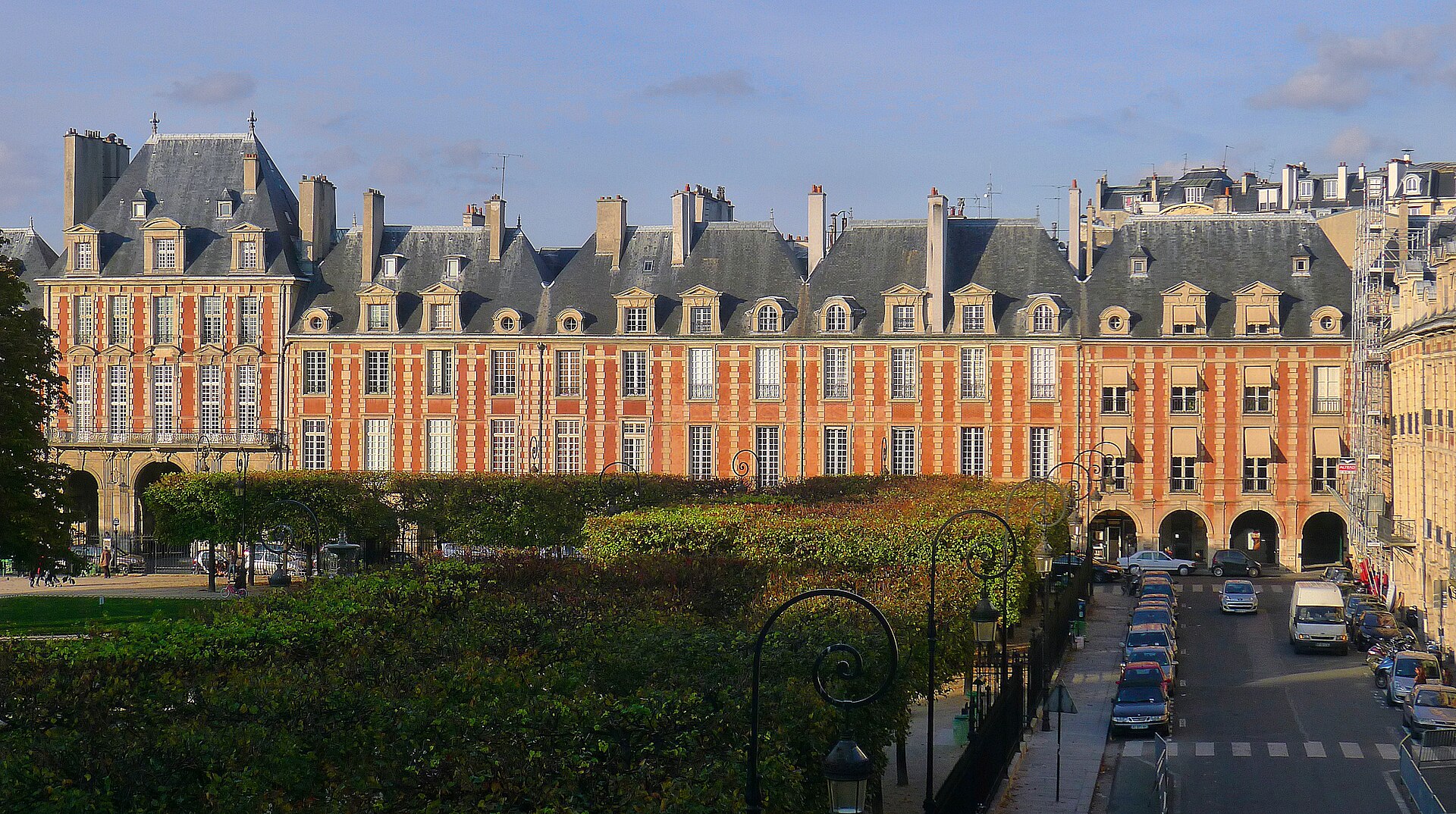
This is the Place des Vosges — thirty-six red brick houses, four stories each, arranged in a perfect square around the park. Every facade is identical, because the king ordered it that way.

This is the Place des Vosges — thirty-six red brick houses, four stories each, arranged in a perfect square around the park. Every facade is identical, because the king ordered it that way. Henri the Fourth built this in sixteen twelve, which makes it the oldest planned square in Paris. It's also one of the quietest cons in Paris real estate.

Look closely at the brick. Some of it isn't brick. A number of these facades are plaster — scored, tinted, and painted to LOOK like brick. Real brick was expensive, and the builders gambled that nobody would check. Nobody checked. The most elegant square in Paris has been wearing brick-print wallpaper for four hundred years, and it works, because no one inspects anything this pretty.

The square started life as Place Royale. Then the Revolution arrived, and royal anything became a liability. In eighteen hundred the government renamed it for the Vosges, the first department in France to pay its new taxes. That's the entire story. The most beautifu

l square in Paris is a receipt. For years afterward, the runner-up department, the Doubs, disputed the result — they insisted their payment had left first and blamed the roads. France has never re-run the contest.

Now find the corner apartment at number six. In eighteen thirty-two, Victor Hugo moved into the second floor, age thirty, already famous, and stayed sixteen years. He draped the drawing
Hear the full story

Hear this story with audio narration in the Bad Historian app.

Get the App

Quick Facts

  • Place des Vosges, completed in 1612 under Henri IV, is the oldest planned square in Paris — 36 pavilions with facades the king ordered to be identical
  • Some of the facades are not real brick — they're plaster scored, tinted, and painted to imitate brick, because the builders economized
  • The square was renamed from Place Royale in 1800 to honor the Vosges, the first department in France to pay its new Revolutionary taxes
  • Victor Hugo lived on the second floor of 6 Place des Vosges from 1832 to 1848, ran a crimson-draped salon visited by Dumas, Balzac, and Lamartine, and began Les Misérables there — a book he worked on for about 17 years
  • Hugo had antique chests, church panels, and doors sawed apart and rebuilt into furniture of his own design, and created a salon of Chinese-style panels for his mistress Juliette Drouet's house
  • Juliette Drouet lived a few minutes' walk from the square
  • The Maison de Victor Hugo at number 6 is a museum today, and it's free
Featured Tour

Le Marais: Mansions, Masterpieces & the Best Falafel in Europe

9 stops • 33 min

View Tour

Location

Paris, France
Open in Maps