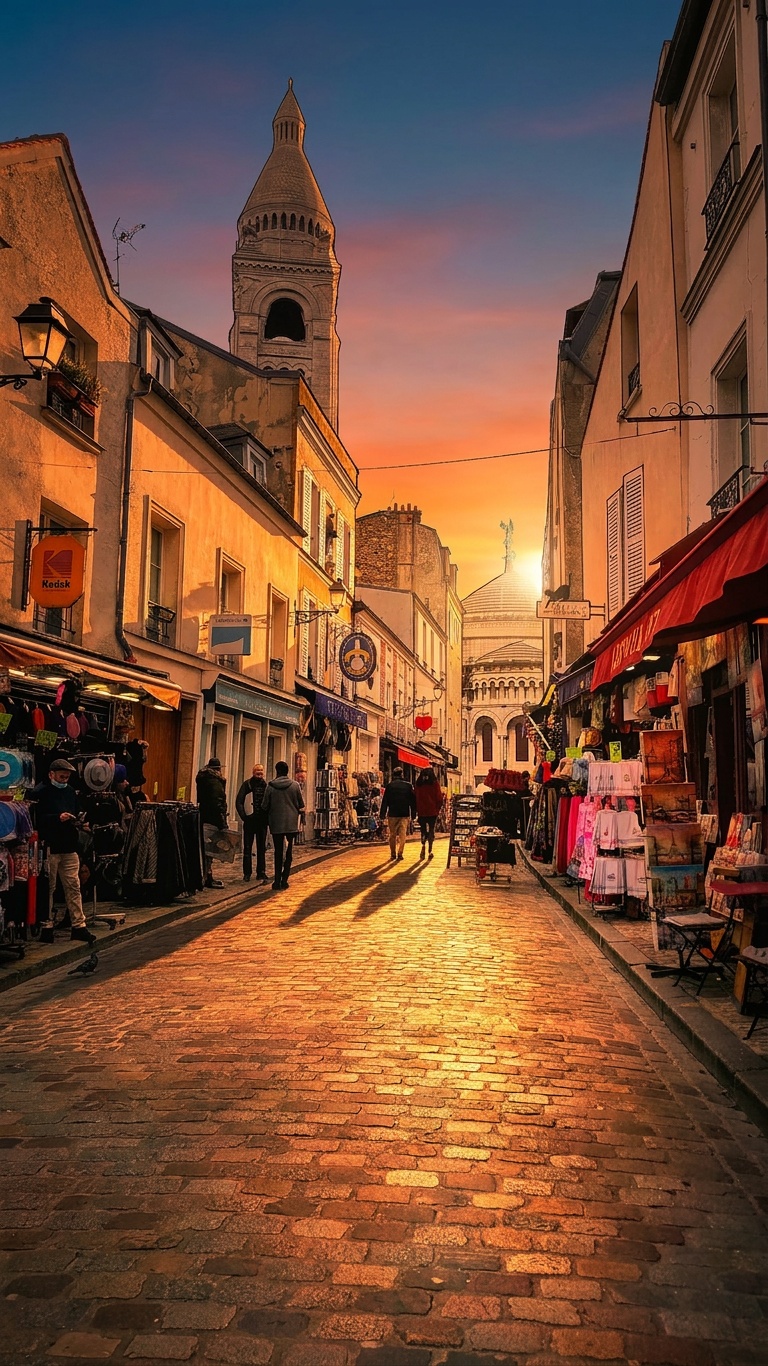
So. Place du Tertre. The most famous artists' square in the world. And yes — it's a little crowded, a little touristy, someone is definitely going to try to draw your portrait in the next ninety seconds. But the tradition is real, and the reason it exists here is one of the best economic stories in Paris.
Until eighteen sixty, this hilltop was not part of Paris. Montmartre was its own town, outside the city walls. And Paris had a tax called the octroi — a duty on goods entering the city, especially wine. Inside the walls, wine was expensive. Up here? No tax. Wine was half the price. And if you're wondering why every cabaret, every dance hall, every broke painter, and every can-can dancer in France ended up on this specific hill — that's why. Cheap wine. That's the origin story of bohemian Paris. Not artistic vision. A tax dodge.
The artists started arriving in the eighteen sixties, drawn by the low rents and the village atmosphere. Renoir came. Toulouse-Lautrec came. Picasso came. Bu
t here's the irony — by the time Place du Tertre became famous as the artist square, the serious artists had already left. The avant-garde packed up and moved to Montparnasse around World War One. So this square has spent a century celebrating artists who weren't painting HERE. They were painting in studios scattered across the hill. This was just the village town hall square — it's been here sinc