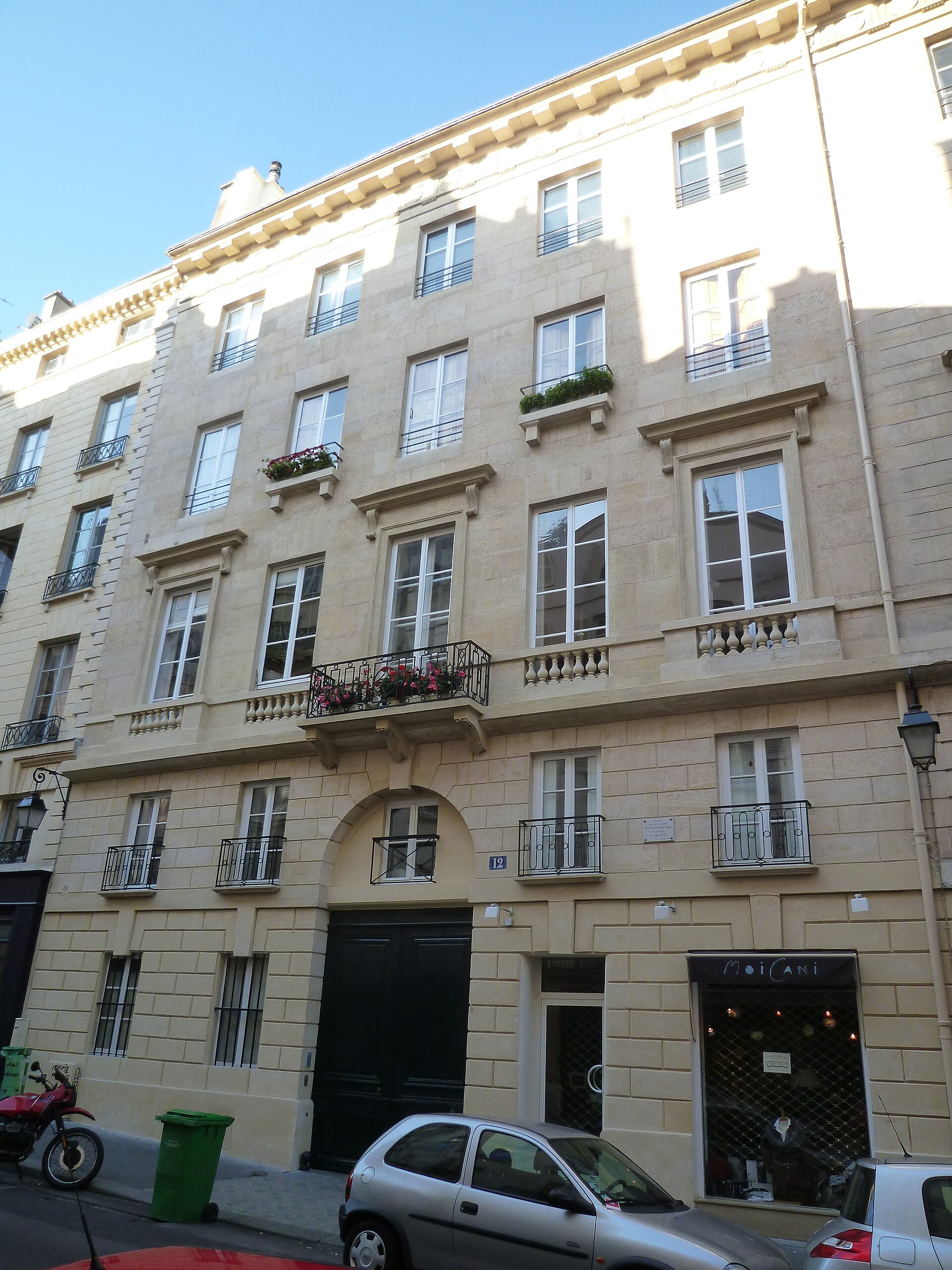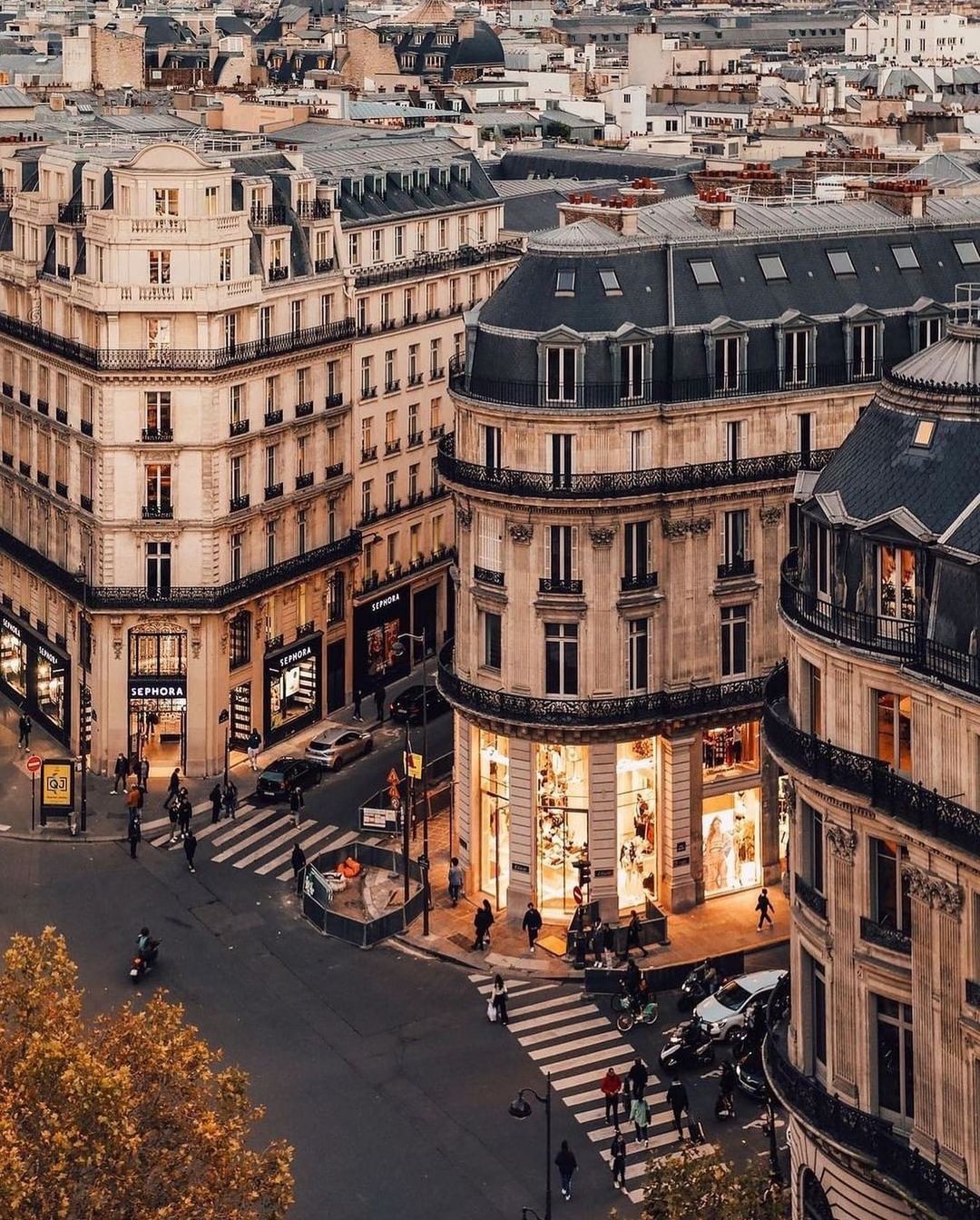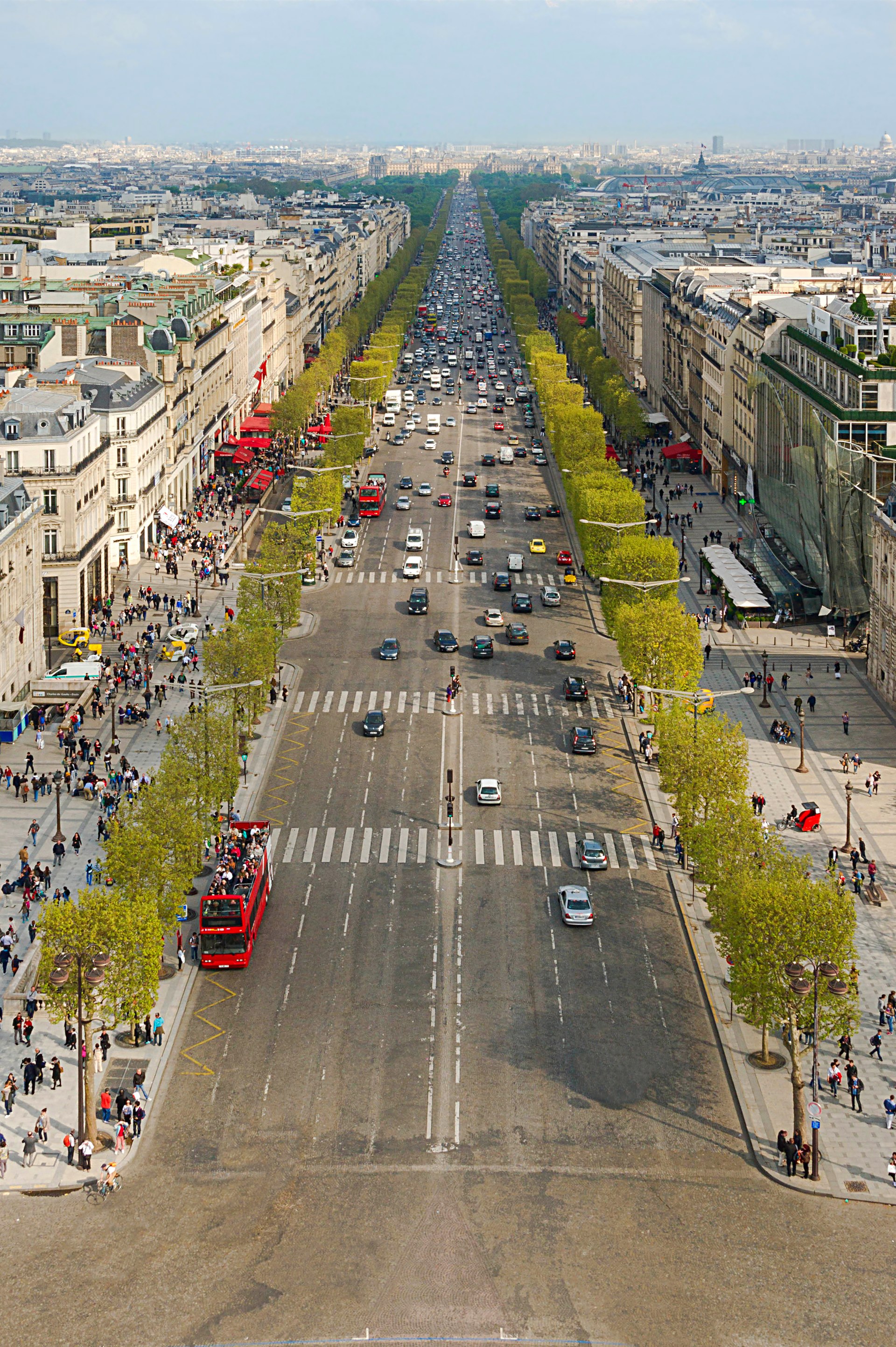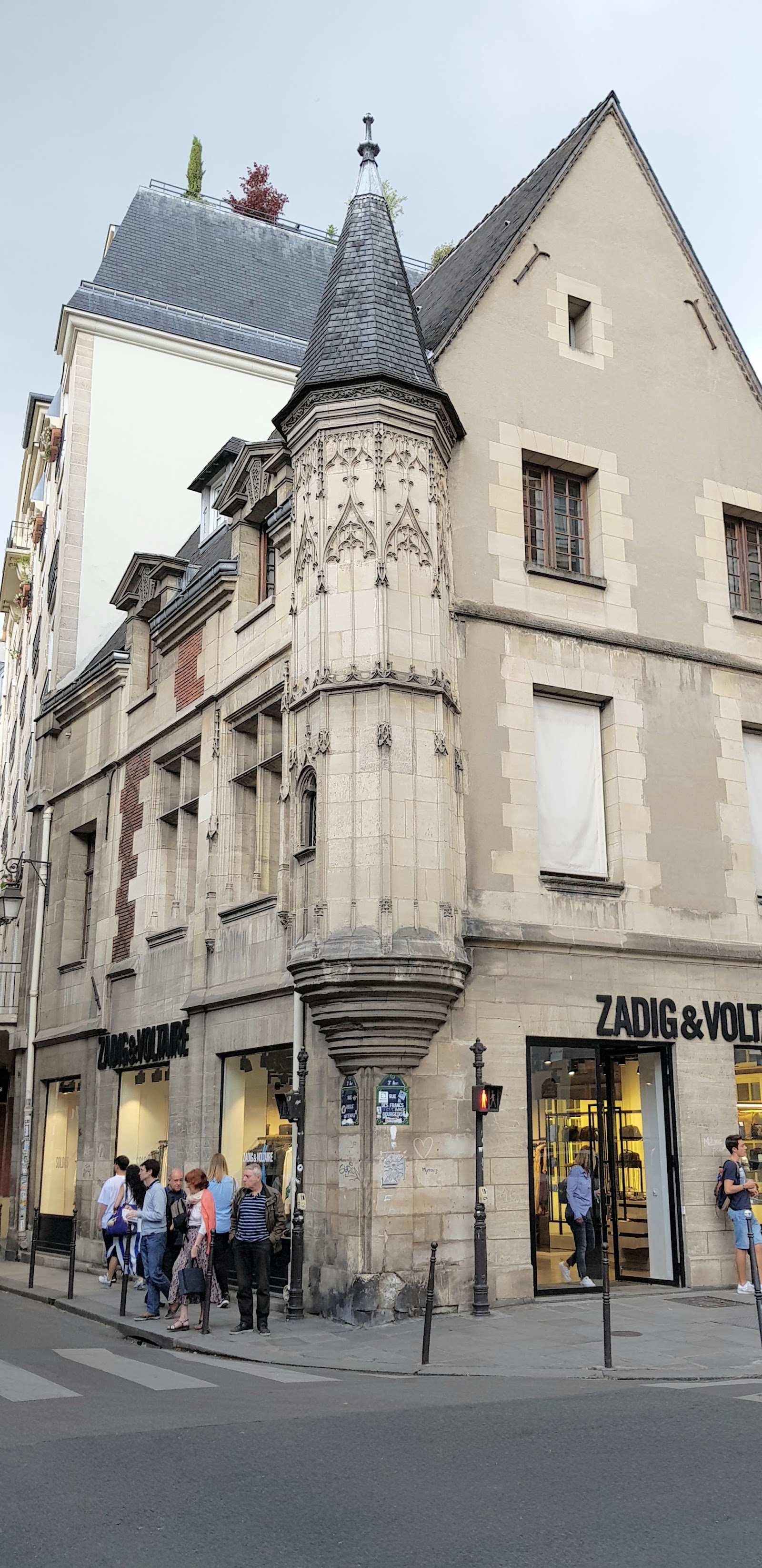
You've reached the Rue des Francs-Bourgeois, the main shopping spine of the Marais. If the street seems to bend for no reason, that's because it does. This is what Paris looked like before Paris looked like Paris. In the eighteen hundreds, Baron Haussmann bulldozed most of the medieval city and replaced it with those wide boulevards and uniform cream buildings everyone photographs. The Marais escaped, mostly because by then it was too poor and unfashionable to be worth demolishing. Neglect turned out to be the best preservation policy in urban history. Then, in the nineteen sixties, France made the whole district its first protected historic quarter, and the crooked streets became permanent.
The street is older than its own name. In the thirteen hundreds it was called the Street of the Pulleys, after the clattering looms of the weavers who worked here. Then the weavers moved on, and the city needed something new to call it.
About the name it chose. Francs-Bourgeois translates as free
citizens, which sounds noble until you learn what the freedom was. In thirteen thirty-four, an almshouse opened on this street for citizens too poor to pay taxes — and franc, here, meant free of TAXES. The city named the street after its officially certified broke people. Within a generation the almshouse register listed forty-eight residents, which was interesting, because the almshouse had twen