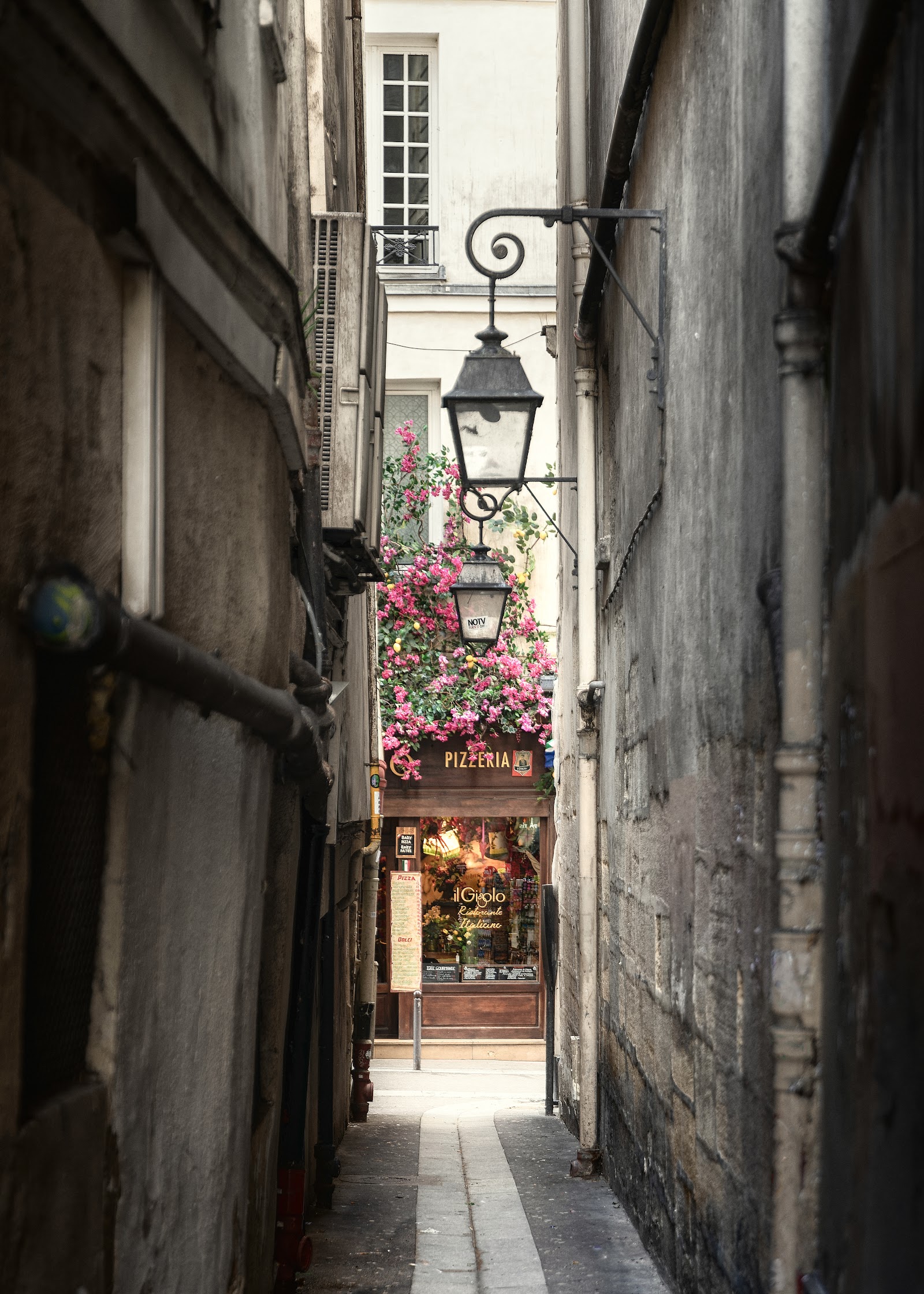
Your eyes will slide right past this one, so slow down. That gap between the buildings — the slot barely wide enough for a doorway — is the rue du Chat-qui-Pêche. Shah-kee-Pesh. The Street of the Fishing Cat. It's the narrowest street in Paris: one point eight meters across, about the width of a tall man lying down. Step into it and you can nearly touch both walls without straightening your arms.
It opened in fifteen forty as a working lane down to the Seine, back when the riverbank right there was all mud, boats, and fish sellers. The name comes from a legend the neighborhood has told for centuries. A black cat lived on this lane. Some versions say it belonged to a canon who dabbled in alchemy. The cat grew famous for crouching at the water's edge and hooking fish out of the Seine with one swipe of its paw. The cat got a reputation. The reputation got a street. Five hundred years later, the cat has outlasted every business that ever operated here.
Streets like this are also the reas
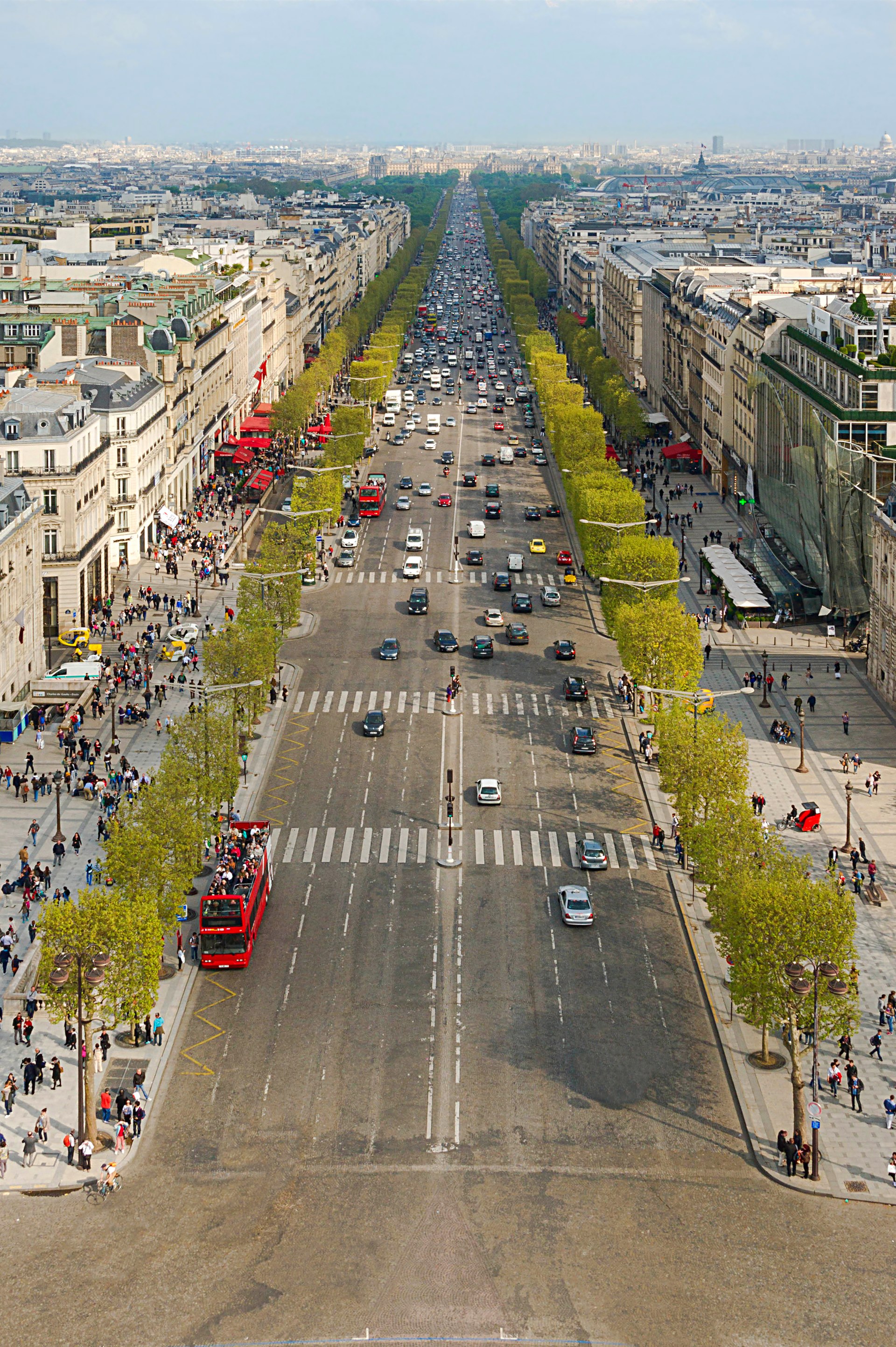
on this quarter feels different from the rest of Paris. In the eighteen hundreds, Baron Haussmann demolished some twenty thousand buildings to carve his grand boulevards through the city. The Latin Quarter's medieval tangle mostly survived him. These lanes — narrow, crooked, shaped by a thousand years of people cutting corners — are the Paris that existed BEFORE Paris got its famous makeover. This