The Conciergerie

The Conciergerie

Paris, France

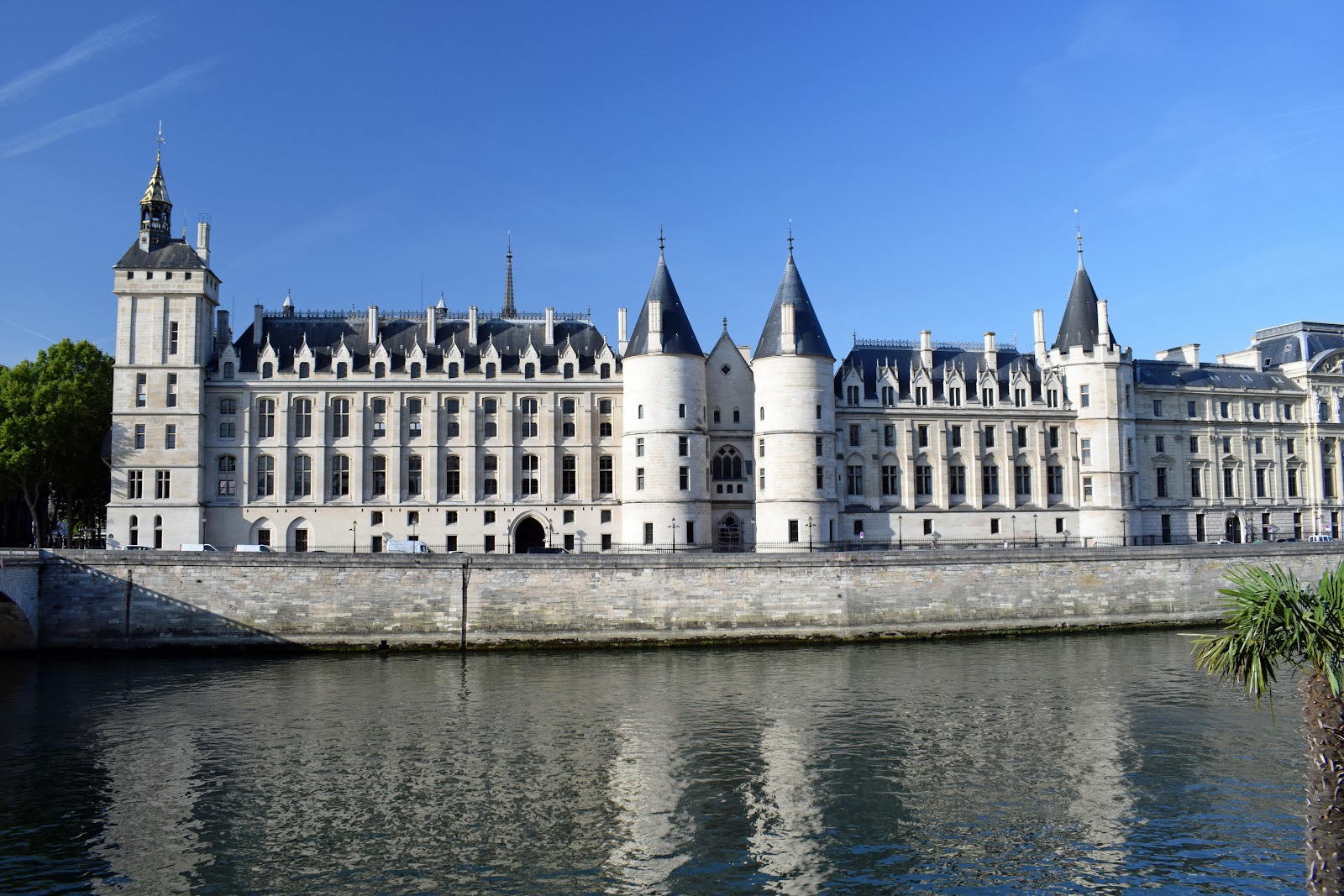
Those pale round towers with the witch-hat roofs, running along the river — that's the Conciergerie. And on the square corner tower, look for the gold. That's a clock.

Those pale round towers with the witch-hat roofs, running along the river — that's the Conciergerie. And on the square corner tower, look for the gold. That's a clock. It was installed in thirteen seventy-one, it was the first public clock in Paris, and it is still telling time. When they restored it, they redid the face in gold leaf and royal blue, so the oldest clock in the city is also the flashiest. Six hundred and fifty years on the same corner. Check it against your phone. It's right.

Before the Louvre was anything but a fort, this was the palace of the kings of France. They lived here for centuries. The great hall inside is the largest surviving medieval hall in Europe. The kitchens next to it could feed two thousand people at a sitting.

The kings left because of one very bad afternoon. In thirteen fifty-eight, during a tax revolt, a mob led by a merchant named Etienne Marcel walked into the palace. They butchered two of the crown prince's top men in front of him — close enoug

h that the prince's clothes were splashed. When that prince got power back, he moved the royal family out and never returned. The palace was handed over to clerks, courts, and a caretaker whose title was the concierge. The caretaker's job title swallowed the whole building. That's the name on it today.

And under the Revolution, this building became the antechamber of the guillotine. Nearly two th
Hear the full story

Hear this story with audio narration in the Bad Historian app.

Get the App

Quick Facts

  • The Conciergerie clock, installed in 1371, was the first public clock in Paris and still keeps accurate time on the same corner
  • The Palais de la Cité was the royal palace before the Louvre; its great hall is the largest surviving medieval hall in Europe, and the kitchens could feed 2,000 people at a sitting
  • In 1358, a mob led by Étienne Marcel murdered two of the crown prince's top men in front of him; the royals moved out for good, leaving the palace to courts and a caretaker — the "concierge" — whose title named the building
  • Nearly 2,800 prisoners were held here on their way to the Revolutionary Tribunal and the guillotine
  • The prison ran on a class system: free straw for the poor, a real bed at the paid "pistole" rate, and private cells for the wealthy
  • Marie Antoinette, registered as "Widow Capet, prisoner number 280," spent 76 days here under round-the-clock watch with only a folding screen for privacy
  • The Carnation Plot was real: a royalist officer dropped a carnation holding an escape note at her feet, and she pricked her reply into paper with a pin — the pin-pricked note survives in the French National Archives
Featured Tour

The Islands & the River

9 stops • 34 min

View Tour

Location

Paris, France
Open in Maps