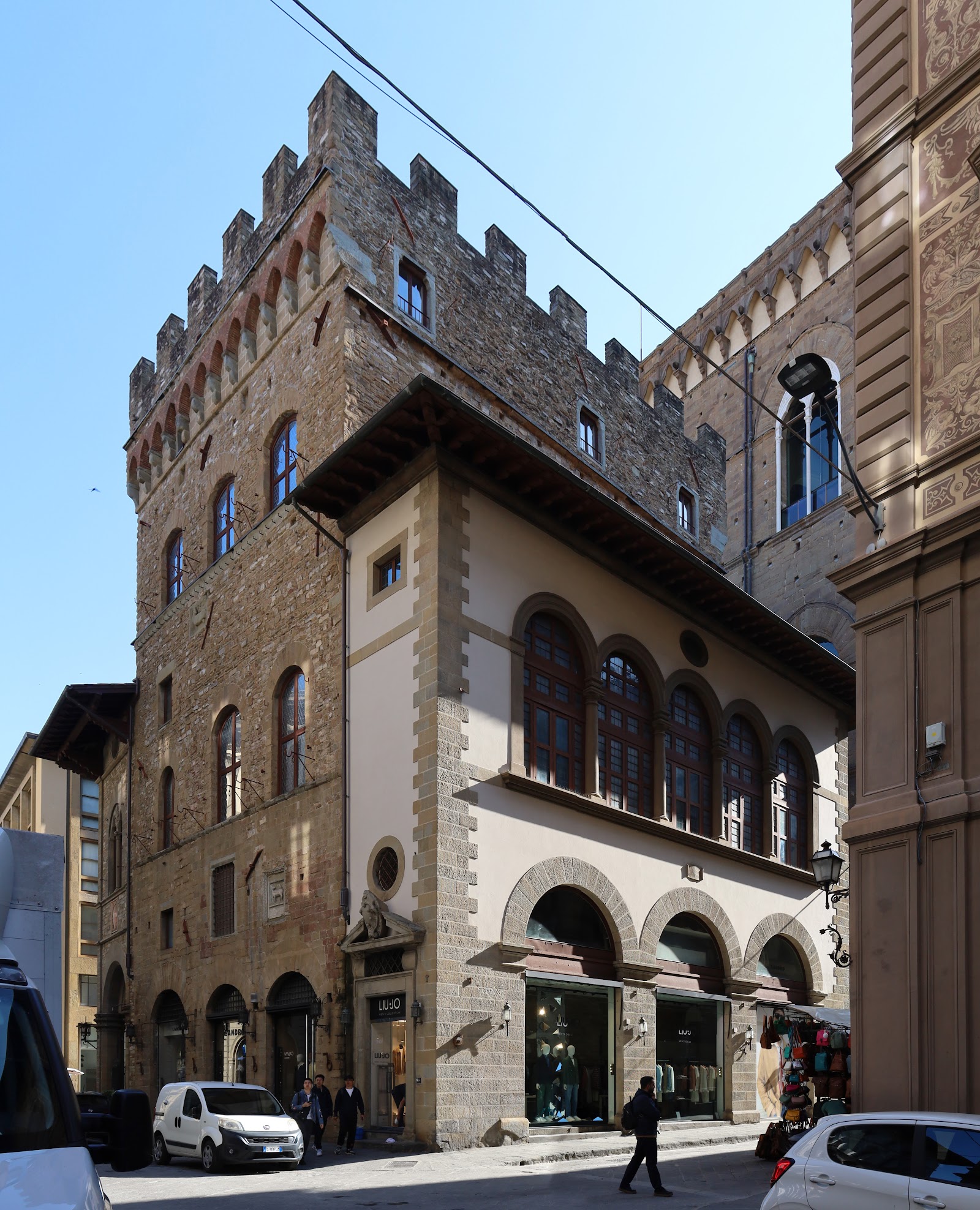
That tall, square, honey-brown building with statues standing in niches all the way around it is Orsanmichele. Most people stop for the saints. I want you to look up and off to the side, at the little covered bridge — the enclosed stone walkway arching over the lane, joining Orsanmichele to the sterner palace across the way. That palace is the Palazzo dell'Arte della Lana. The house of the wool guild. And that bridge is the most Florentine object on this entire walk, because it means a committee of cloth merchants once built themselves a private overpass so they could get from their boardroom to their chapel without setting foot on the street.
What these men did is the reason there's a Renaissance to visit at all. Six hundred years ago, wool cloth was the biggest business in Europe, and Florence ran it. Not grew it — England grew the wool. Florence did the clever part. The finishing.
One guild, the Calimala, imported rough, undyed cloth from England and Flanders, hauled it over the A
lps, and then Florentine hands washed it, stretched it, combed it, and above all dyed it — reds from crushed insects, blues fermented from a weed in vats that smelled like a crime, colors nobody else could fix so cleanly that they wouldn't run. A bale of plain English wool cost you thirty, maybe forty florins. The same wool, finished in Florence, sold across Europe for a hundred and twenty. They t