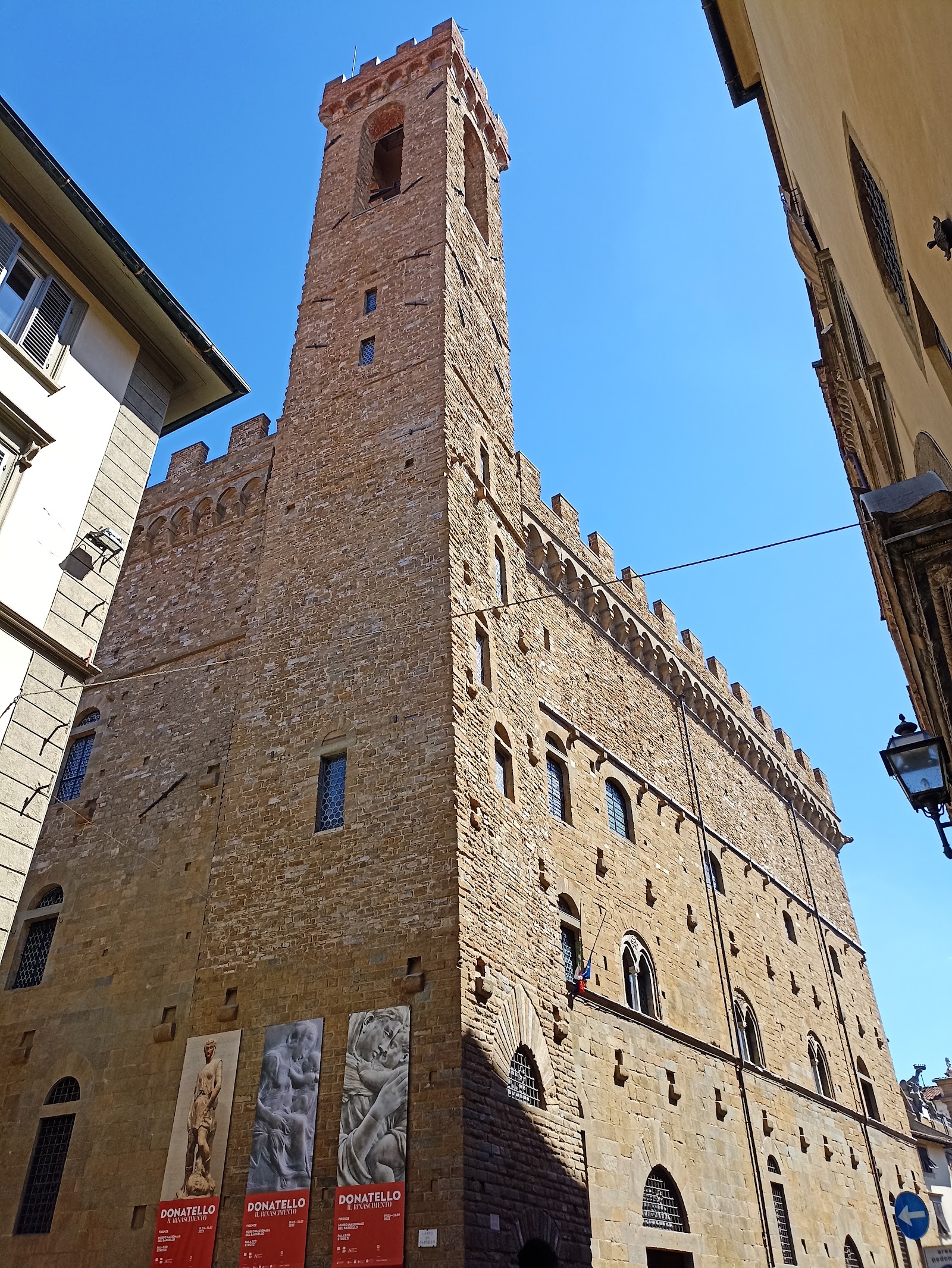
You're at the Bargello — a blunt, battlemented stone box that spent centuries as a prison and an execution yard before it became the finest sculpture museum in Italy. Somewhere inside are two small bronze panels, mounted side by side, each about the size of a serving tray, both showing the exact same scene: an old man with a knife, a boy bent back over an altar, an angel lunging in to grab his arm. Abraham, about to sacrifice his son. Two artists, one assignment, the same year. You are looking at the starting gun of the entire Renaissance, and it's a tie that nobody could agree on.
Rewind to fourteen oh-one. The wool merchants who ran this city announced a competition to design a new set of bronze doors for the Baptistery, and it became the most consequential art contest ever held. The rules were strict, and the same for everyone. Each finalist got an identical quantity of bronze, exactly one year to work, and one fixed subject to render: the Sacrifice of Isaac — Abraham told by God t
o kill his own son, and stopped at the last second. Same story, same materials, same clock. Seven men made it to the final round. Two panels rose above the rest. One was cast by Lorenzo Ghiberti, barely twenty. The other by a short-tempered goldsmith named Filippo Brunelleschi.
Yes. That Brunelleschi. The dome man. Before he was the dome man, he was here, in a glass case, losing.
Get close and y