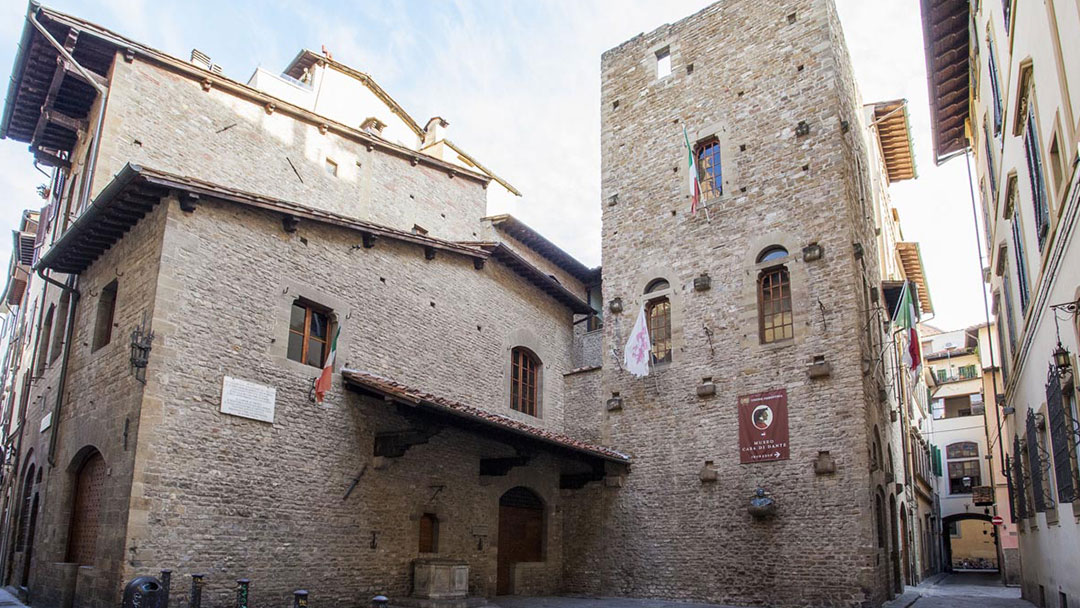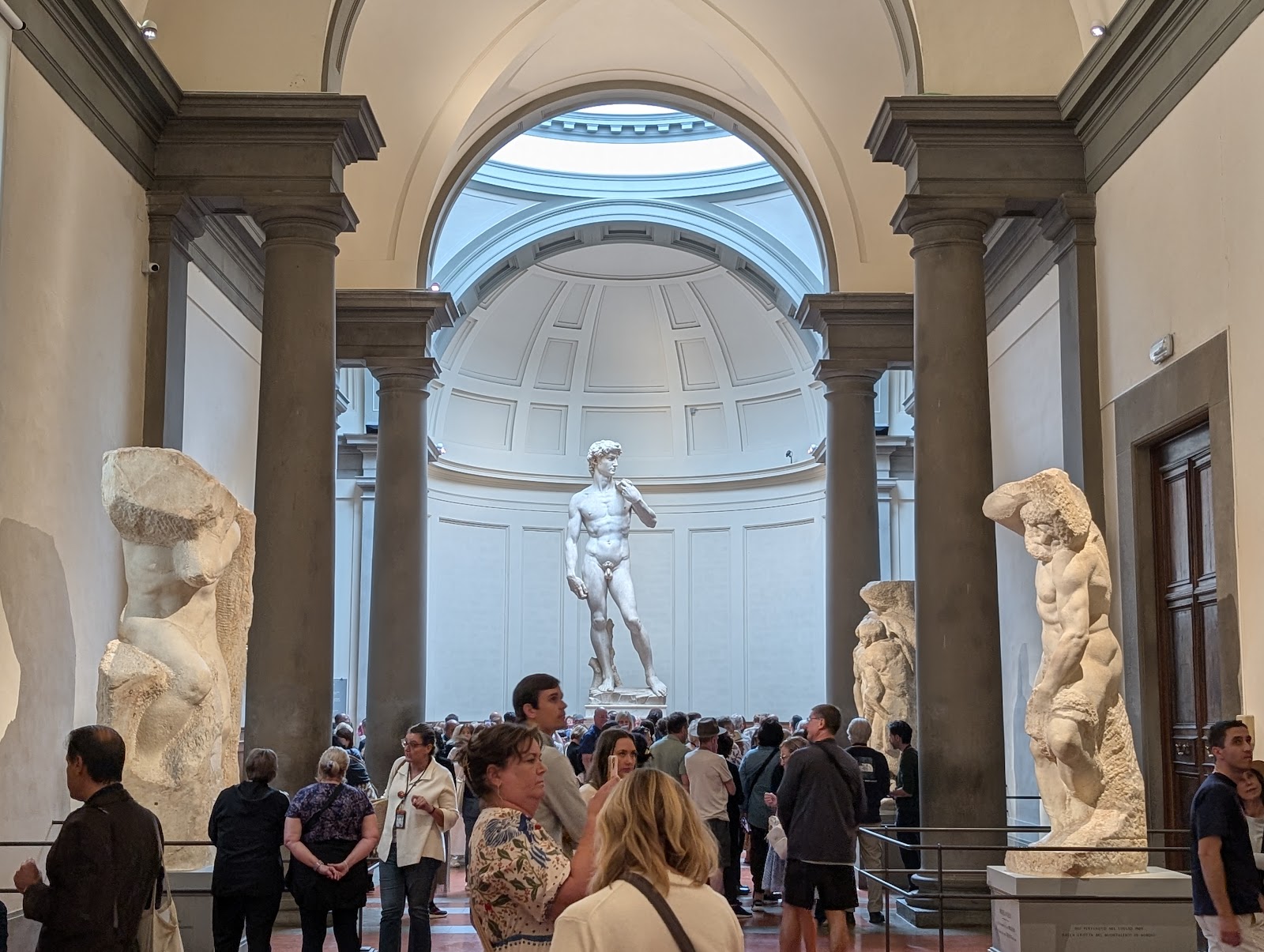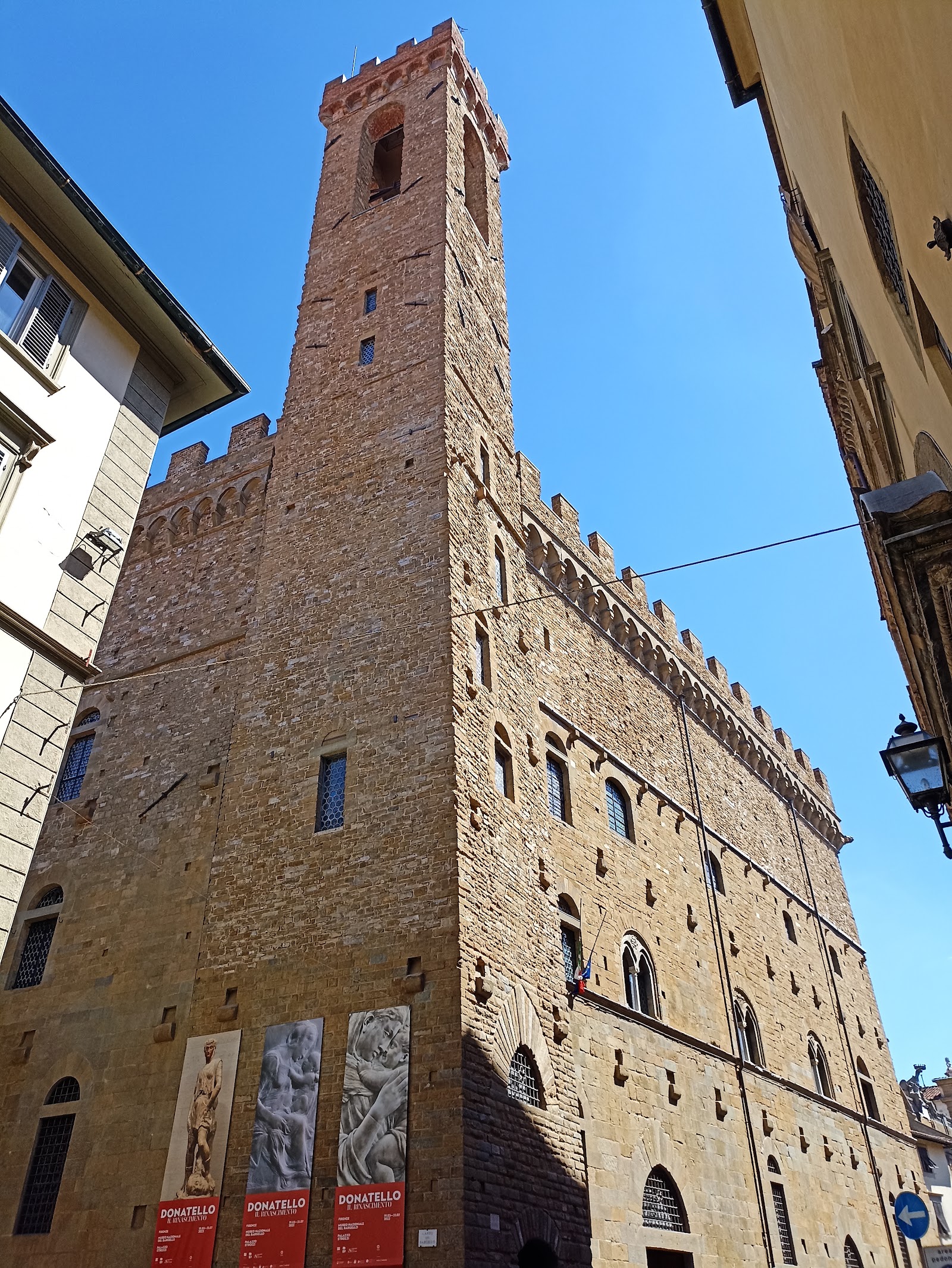
This severe battlemented palace with the tower is the Bargello. Today it holds the greatest collection of sculpture in Italy — Donatello's bronze David, early Michelangelo, and the two famous trial panels from the contest that launched the Renaissance. People come here for beauty. For most of its life, this building was a place people were dragged to in chains. It was the city's prison, its criminal court, and its execution house.
The name gives it away. The Bargello was the chief of police, and this was his headquarters. Executions were carried out in the courtyard you can walk through — the one now lined with elegant carved coats of arms. Bodies were displayed. A bell in the tower tolled to summon the crowd. If Florence wanted to kill you officially, this is where it happened.
This was one of the oldest public buildings in the city — begun in the twelve hundreds as the seat of the chief magistrate, the Podestà — and the walls of its courtyard are still crusted with hundreds of carv
ed stone coats of arms, the crests of the officials who cycled through. Inside, on the wall of the chapel where condemned prisoners spent their final hours, a faded portrait of a hook-nosed man was uncovered centuries later. It's believed to be the oldest surviving likeness of Dante, painted by Giotto — the exiled poet's face, looking down over the cell of the doomed. And on their last walk, priso