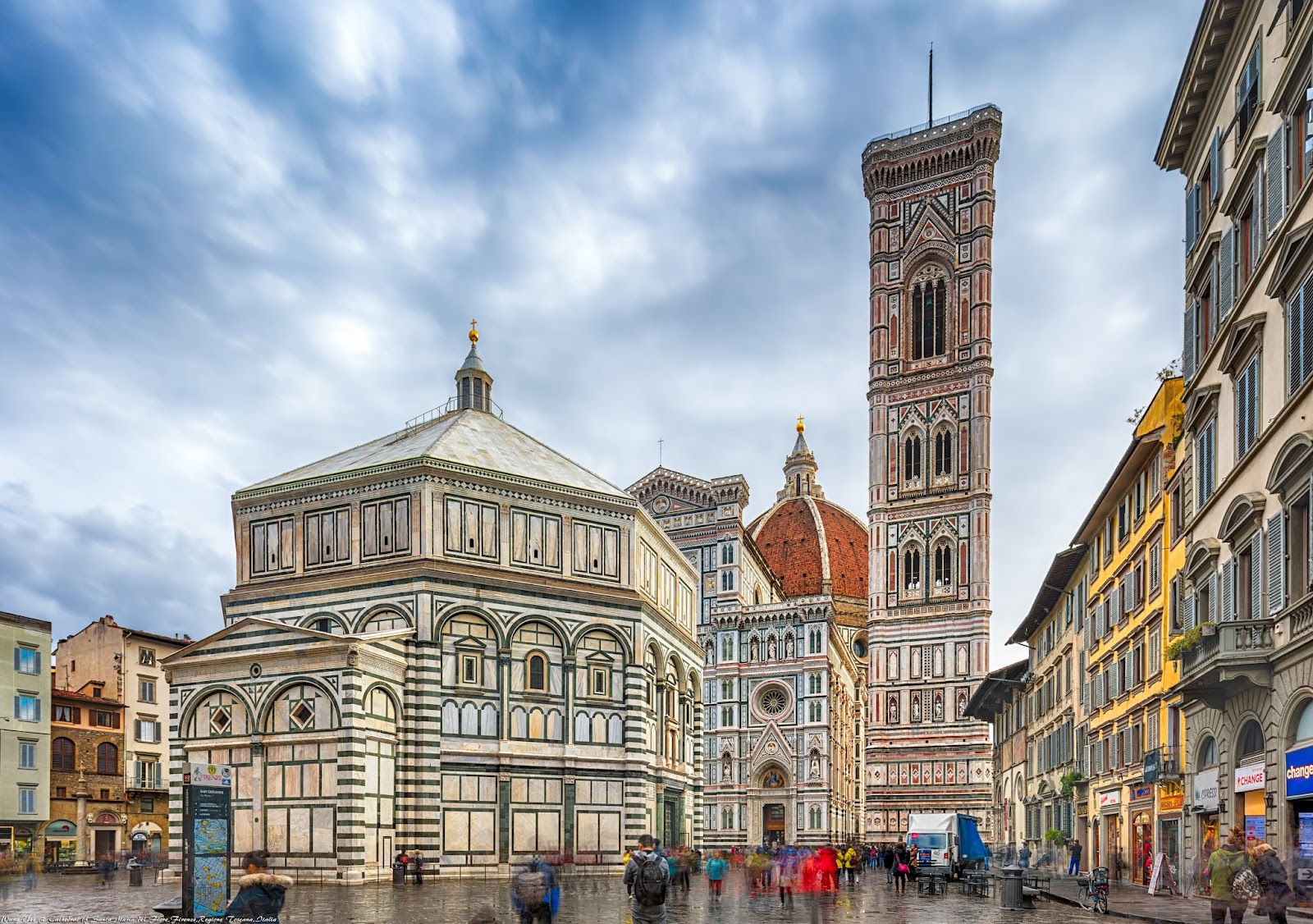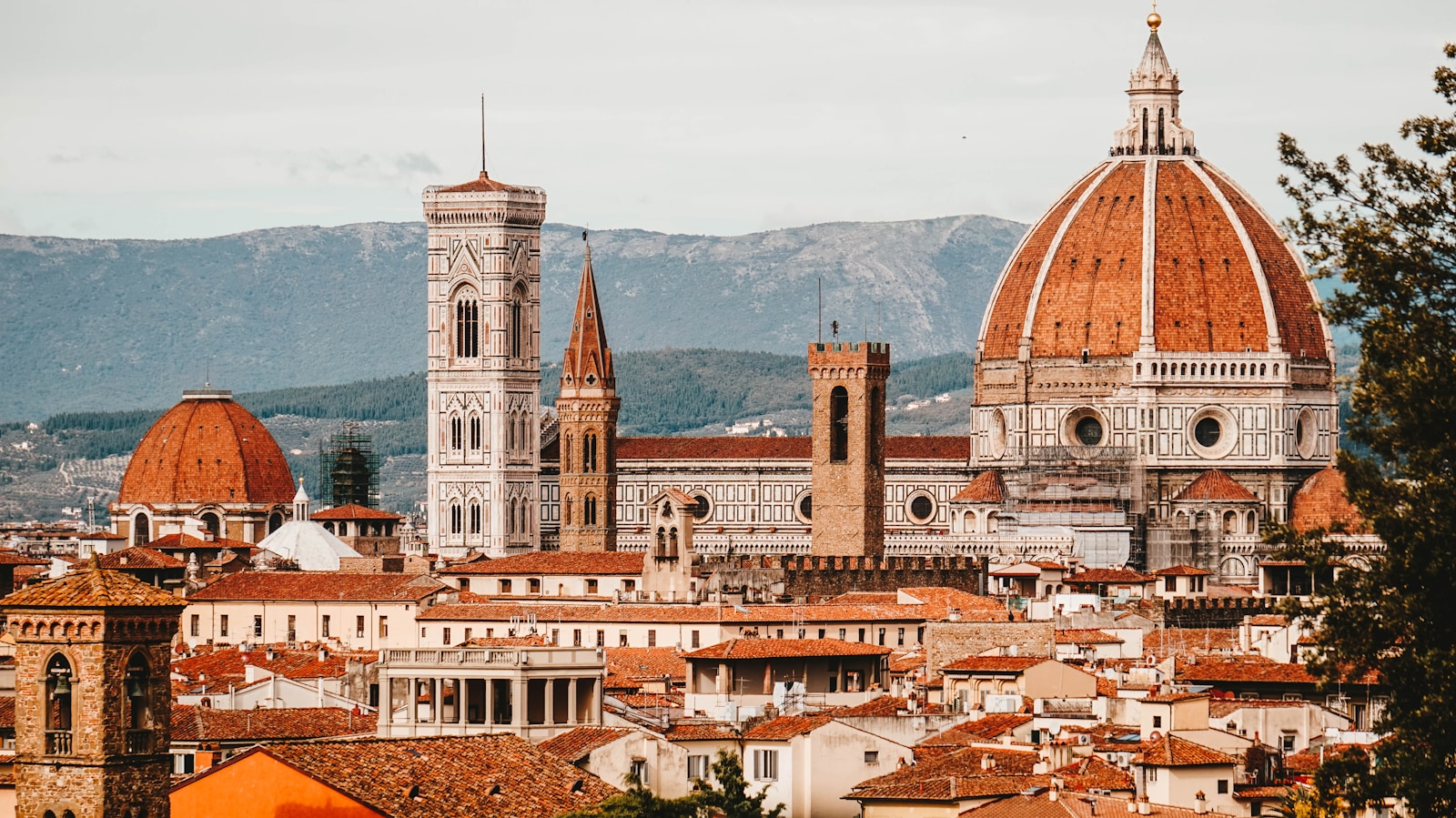
Now you're right underneath it. The Duomo — Santa Maria del Fiore — wrapped in green, white, and pink marble, with a bell tower beside it in the same candy stripes. Look past the fancy front, up to the top. That dome. Brick-red, enormous, the thing you can see from every hill around the city. It is the largest masonry dome ever built. And when they started this cathedral, nobody on earth knew how to build it.
That is not a figure of speech. They began the church in the twelve nineties, made it gigantic on purpose, and left a hole at the top — an octagon about a hundred and forty feet across — with no plan for how to cover it. The technology to span that gap did not exist yet. And they built it anyway, as a bet. A public, permanent, century-long bet that eventually somebody would be born who could finish the job. For decades, the grandest church in the city stood open to the sky. When it rained, it rained inside.
The somebody showed up in the fourteen hundreds, and it wasn't an archit
ect. It was a goldsmith named Filippo Brunelleschi — trained in metalwork, famously difficult, with not one building to his name. He won the commission, then refused to explain his method, which nearly got him thrown off the job as a crank. The problem was easy to state and impossible to solve. A dome that big normally needs a forest of wooden scaffolding underneath, holding the shape while it set