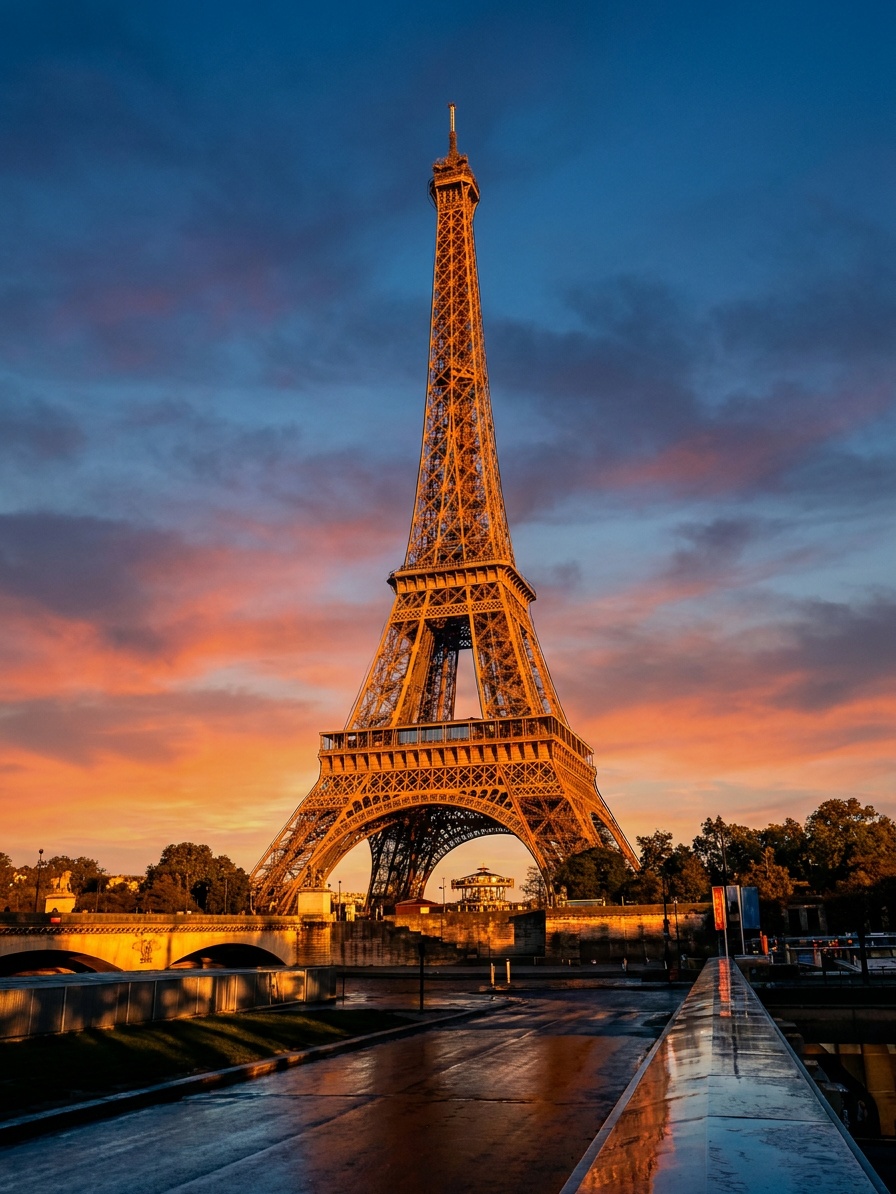
So. The Eiffel Tower. Three hundred and thirty meters tall, seven thousand three hundred tonnes of iron, two and a half million rivets. You've seen it a million times. Here's the part that still surprises me — almost none of it was supposed to still be here.
The tower was built for the eighteen eighty-nine World's Fair with a twenty-year permit. That's it. Twenty years. A TEMPORARY structure — like a festival tent, except three hundred meters tall and made of seven thousand three hundred tonnes of iron. The plan was simple: host the fair, impress some people, tear it down by nineteen oh-nine. Gustave Eiffel had the whole thing pre-fabricated in his factory — eighteen thousand unique iron pieces, each one machined to an accuracy of a tenth of a millimeter — and assembled on-site with a crew of three hundred workers in two years, two months, and five days. Not a single person died during construction. In the eighteen eighties. Building the tallest structure on Earth. Zero fatalities. Th
at's not luck. That's obsession.
And here's the part that still gets me. If you melted all seven thousand three hundred tonnes of iron into a single block, it would fit inside a ball about twelve meters across. The tower is ninety-nine percent air. It weighs LESS than the air inside it — if you drew a cylinder around the tower the same height and width, the air in that cylinder would weigh ten th