The Louvre

The Louvre

Paris, France

Welcome to the Louvre. See that glass pyramid? When it was announced in the early nineteen eighties, ninety percent of Parisians were against it. One member of the Academie Francaise wrote simply: Poor France.

Welcome to the Louvre. See that glass pyramid? When it was announced in the early nineteen eighties, ninety percent of Parisians were against it. One member of the Academie Francaise wrote simply: Poor France. At the planning meeting, an expert shouted at the architect, I-M Pei, You are not in Dallas now. They also called him Japanese. He's Chinese-American. Paris was not having a great day.

The pyramid has six hundred and seventy-three glass panes — not six hundred and sixty-six, despite what Dan Brown wrote. Dan Brown was wrong. Dan Brown is often wrong. Moving on.

The Louvre itself started in eleven ninety as a defensive fortress — thick walls, a moat, built to keep the English out. The medieval foundations are still down in the basement, and you can visit them. Over the centuries, kings turned the fortress into a palace, and then the Revolution turned the palace into a museum. Today it holds over three hundred and eighty thousand objects, of which about thirty-five thousand are o

n display. That's nine percent. If you spent thirty seconds looking at every displayed piece, it would take over a hundred days. You are not going to see the whole Louvre. Nobody sees the whole Louvre. The Louvre hasn't seen the whole Louvre.

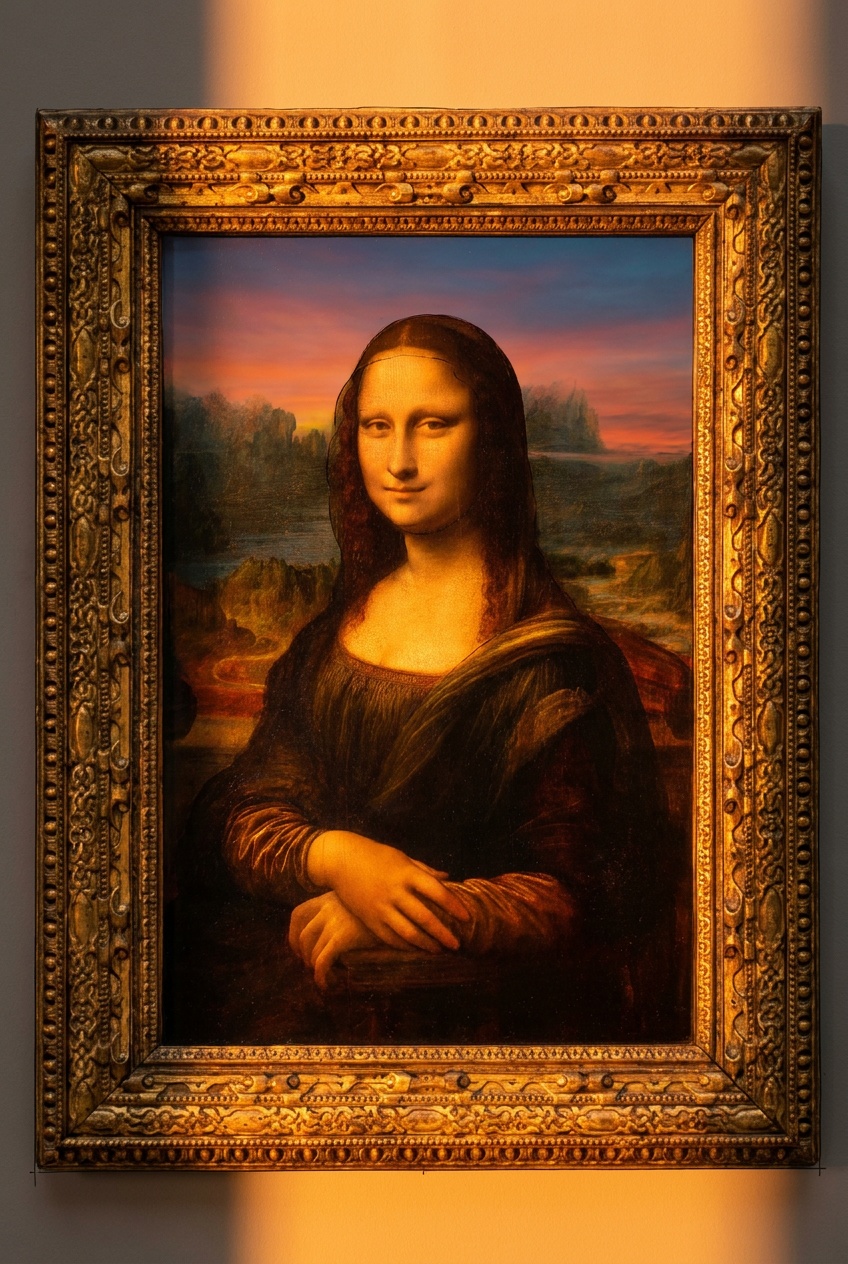
But you're here for ONE painting. Everyone is. The Mona Lisa. And here's the thing — before nineteen eleven, almost nobody cared about the Mona Lisa.

I'm e
Hear the full story

Hear this story with audio narration in the Bad Historian app.

Get the App

Quick Facts

  • 90% of Parisians opposed the Louvre's glass pyramid when it was announced; a critic told Chinese-American architect I.M. Pei "You are not in Dallas now" and mistook him for Japanese
  • The pyramid has 673 glass panes, not 666 as Dan Brown claimed in The Da Vinci Code
  • The Louvre started as a defensive fortress in 1190; the medieval foundations are still visitable in the basement
  • The Mona Lisa was relatively obscure until Vincenzo Peruggia, a Louvre handyman, stole it in 1911 by hiding in a closet overnight and walking out in a staff smock — a plumber even helped him through a locked door
  • Nobody noticed the painting missing for over 24 hours; crowds later lined up just to stare at the empty wall
  • Peruggia kept the painting under his bed in a false-bottom trunk for two years before trying to sell it in Florence under the alias "Leonardo Vincenzo"
  • Napoleon did not steal the Mona Lisa — Leonardo da Vinci brought it to France himself around 1516
  • About 40% of visitor comments about the Mona Lisa today are negative, and the museum has considered moving it underground
Featured Tour

The Postcard Tour

10 stops • 58 min

View Tour

Location

Paris, France
Open in Maps