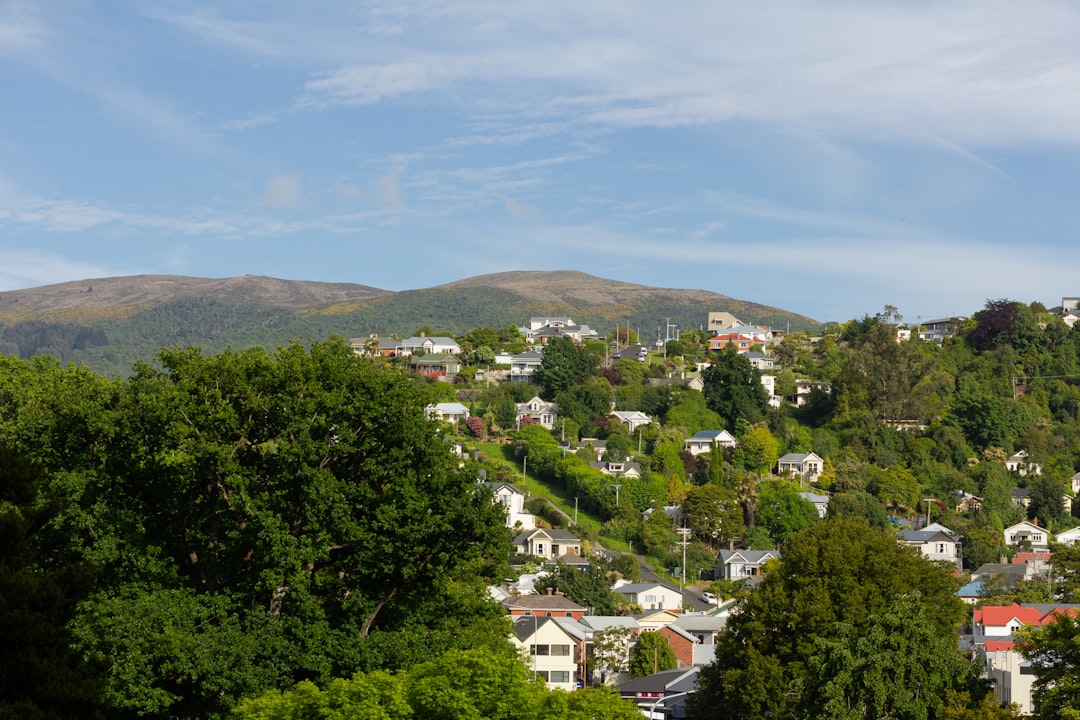
You're standing at the entrance to San Francisco's oldest park. Buena Vista — Spanish for good view — has been here since eighteen sixty-seven. That makes it three years older than Golden Gate Park. Thirty-seven acres of forest on a hill in the middle of a city.
But here's why you should look down before you look up.
The gutters under your feet — the drainage channels running along the pathways — are made of tombstones. Real ones. From real graves. With real names carved into them.
Here's what happened. Starting in nineteen fourteen, San Francisco's Board of Supervisors decided they didn't want dead people taking up valuable real estate. They ordered every cemetery in the city removed. All of them. The bodies were relocated to a town just south of here called Colma — which now has about two thousand living residents and one point five million dead ones. Colma's unofficial motto is it's great to be alive in Colma. That is not a joke. That is their actual marketing.
The headstones no
body claimed became city property. In the nineteen thirties, W-P-A workers — the Depression-era public works crews — broke them up and used them as construction material. Gutters. Retaining walls. Seawalls. The stones came from what locals called the Big Four cemeteries — Laurel Hill, Calvary, the Masonic Cemetery, and the Independent Order of Odd Fellows.
Workers were instructed to lay every hea