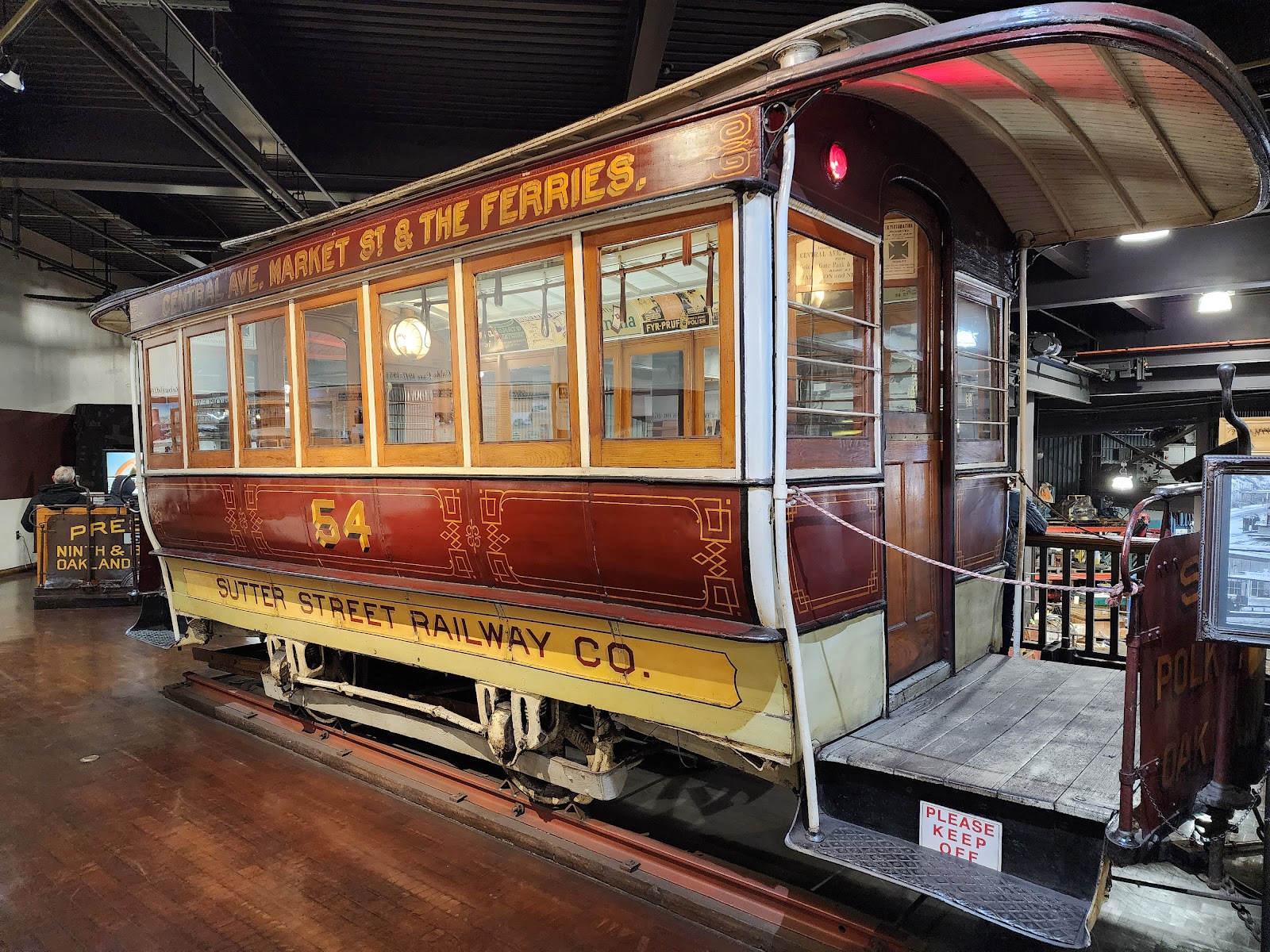
This building is not a museum. I mean, it is — there are exhibits and old cable cars and plaques — but what you're actually standing in is a working power plant. The cables that pull every cable car in San Francisco run through this room right now while you're looking at them.
See those massive wheels turning? That's a continuous loop of steel cable — about an inch and a half thick — moving under the streets at nine and a half miles per hour, always moving, all day. The gripman on the cable car operates a mechanical grip that clamps onto the cable — tight grip, you move, release the grip, you stop. And the brakes? The brakes on a fifteen-thousand-five-hundred-pound cable car are blocks of pine wood dragging across the tracks. That's it. On rainy days, the gripman steps on a pedal that shoots sand onto the rails because the wood blocks can't get enough friction on wet steel. You are riding nineteenth-century technology held together by lumber and sand.
Seventy-five percent of gripman
trainees wash out, and most quit on the first day. It's brute-force mechanical work — you're wrestling a machine that was built before anyone had heard of ergonomics.
The cable car exists because of five dead horses. Back in the late eighteen sixties, a wire-rope manufacturer named Andrew Hallidie watched a team of horses pulling a streetcar up Jackson Street in the rain. They slipped on wet cobb