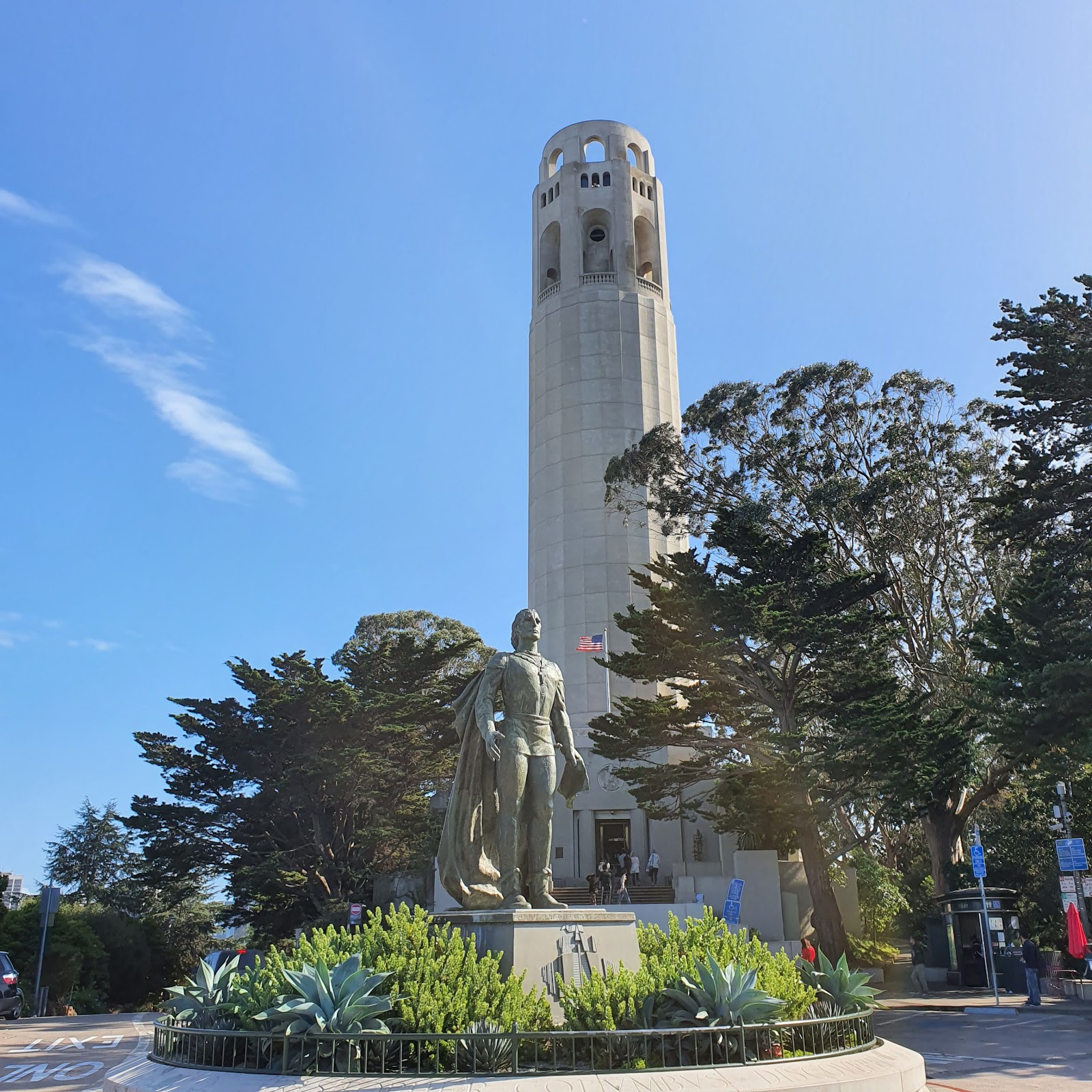
Look up. That's Coit Tower — two hundred and ten feet of fluted concrete on top of Telegraph Hill. People will tell you it was designed to look like a fire hose nozzle. The architect denied it. The woman who paid for it would have loved the rumor.
Lillie Hitchcock Coit was, by any reasonable measure, one of the most unhinged socialites in San Francisco history. At fifteen — this is the eighteen fifties — she saw the volunteer firefighters of Knickerbocker Engine Company Number Five struggling to haul their engine up this hill. They were shorthanded. Lillie dropped her school books, ran to the engine, and started screaming at bystanders to help pull. From that day until the day she died, she was obsessed.
The fire company voted her in as an honorary member. She rode with them to fires, attended their banquets, visited them when they were sick, went to their funerals. She wore a little gold number five pinned to every dress she owned, signed her name Lillie H. Coit Five, and — accordin
g to the people who knew her — sewed the numeral five into her undergarments.
She also smoked cigars, wore trousers, and dressed as a man to sneak into gambling clubs. The San Francisco Chronicle wrote that she was "the most original woman California has produced," which is, I think, underselling it.
Years later, her distant cousin Alexander Garrett burst drunkenly into her suite at the Palace H