See that bar on the corner — the one with the big plate-glass windows? That's Twin Peaks Tavern. In nineteen seventy-two, two women named Mary Ellen Cunha and Peggy Forster bought it and did something that sounds simple but was an act of genuine courage. They took down the window coverings.
Before nineteen seventy-three, virtually every gay bar in America had blacked-out or shuttered windows. Being seen inside one could cost you your job, your family, your housing. Cunha and Forster installed full-length plate glass and let the world look in. People told them it would fail. That nobody would come. They were wrong. That bar is now San Francisco Landmark number two sixty-four.
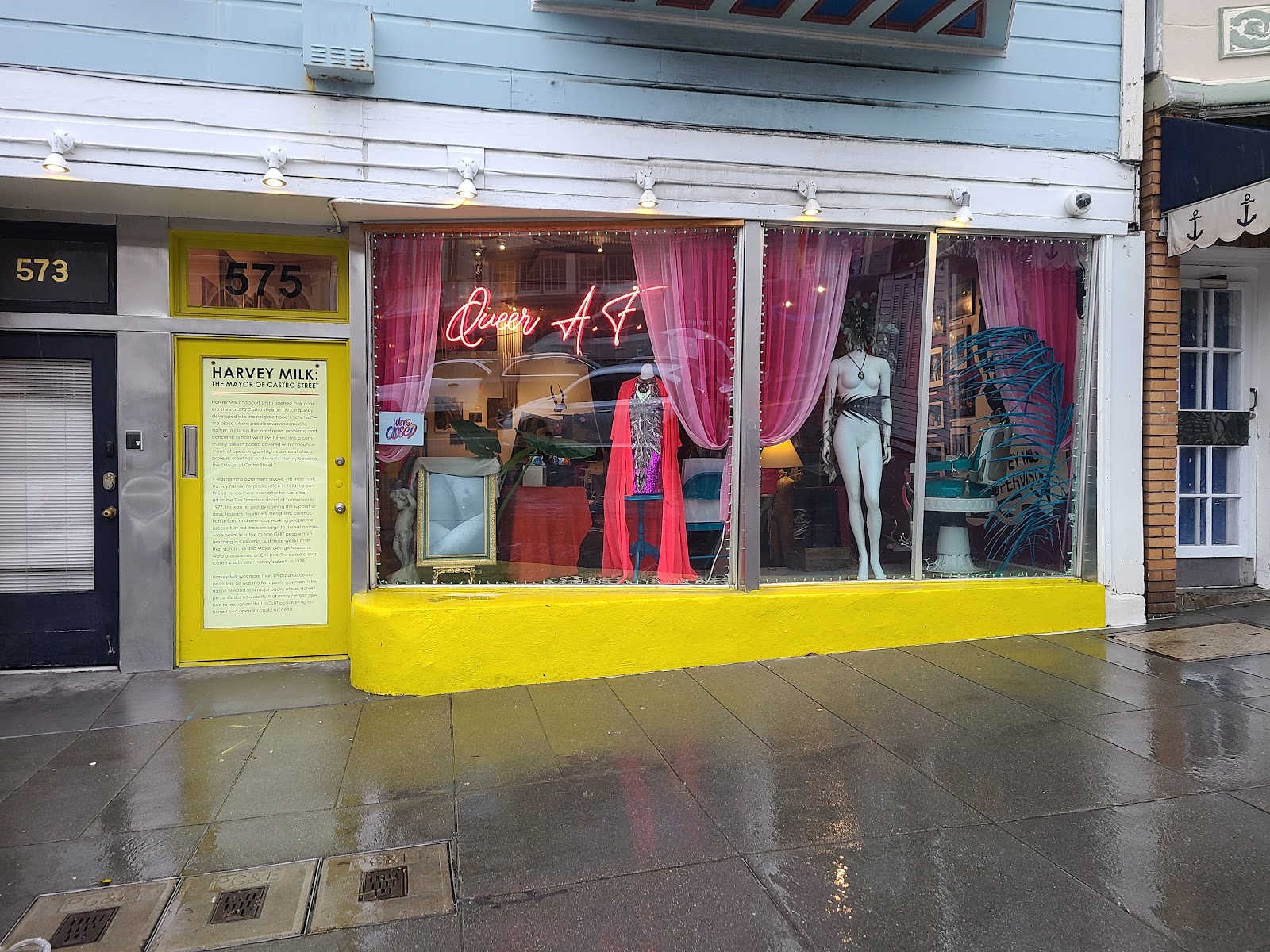
Two blocks south of here, at five seventy-five Castro Street, a man named Harvey Milk opened a camera shop in nineteen seventy-three. He opened it with the last one thousand dollars he had. The reason? A film developer had ruined one of his rolls of film and he was angry about it. That's the origin story. An angr
y photographer with a thousand dollars and no business plan.
The store barely turned a profit. What it did was become a social center — the place where every new arrival to the Castro eventually walked through the door. A woman named Anne Kronenberg walked in one day and became his campaign manager. Her first impression of Harvey Milk — her exact words — was a raving maniac.
Milk ran for office