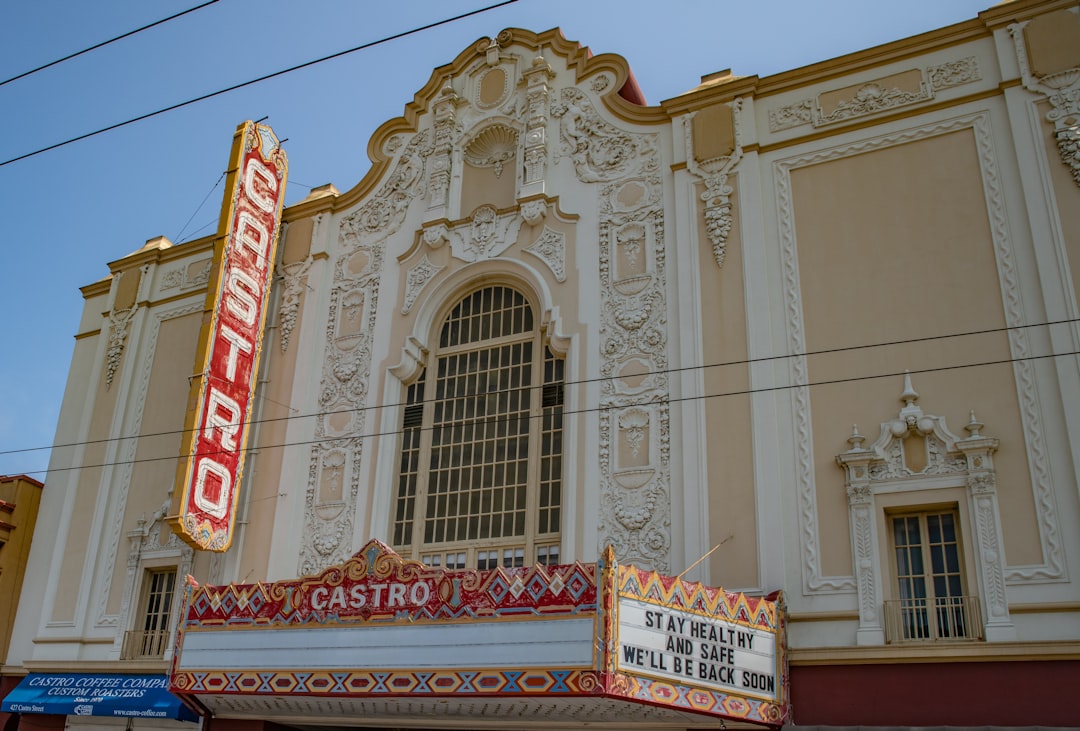
Look at that facade. The big arched window, the scrolling pediment, the Spanish Baroque ornamentation that looks like it belongs on a cathedral in Seville. This is the Castro Theatre — and it started as a candy factory.
In nineteen oh-seven, a Lebanese immigrant named Abraham Nasser was running a grocery store and candy shop at the corner of Castro and Market. One evening, he set up a projector and started showing movies on the back wall of the store. It worked. By nineteen ten, the Nasser brothers had a six-hundred-seat nickelodeon down the block. And by nineteen twenty-two, they'd hired a twenty-eight-year-old self-taught architect named Timothy Pflueger to build this.
It was Pflueger's first solo commission. He had no formal architecture degree. He went on to design Oakland's Paramount Theatre and a dozen other California movie palaces — but this was the one that launched him. He spent three hundred thousand dollars — roughly four point six million today. The goal was a building t
hat would make you forget you were in a working-class Irish neighborhood where the most exciting architecture was the church.
The ceiling is the thing that breaks people's brains. It looks like a draped Moorish tent — golden ropes, tassels, folds of fabric hanging from above. It is ALL plaster. Every tassel. Every rope. Every fold. The technique used to make plaster look like draped leather is ca