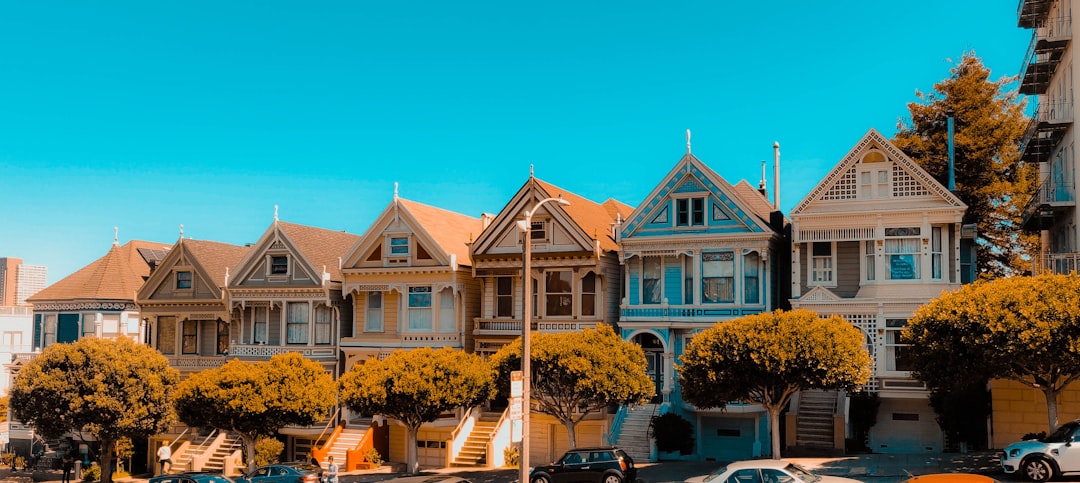
You're looking at the most photographed houses in San Francisco — seven Queen Anne Victorians lined up on a hill like they're posing for a class picture. The postcard view. The Full House opening credits. The shot that has appeared in over seventy movies, TV shows, and commercials.
And every single one of them used to be gray.
Not charming gray. Not aesthetic gray. Battleship gray. During the World Wars, the government had mountains of surplus Navy paint — the same flat gray they used on warships — and it was cheap, so people slapped it on everything. By the nineteen fifties, San Francisco's Victorians looked like a fleet of battleships had run aground on the hillsides.
Then in nineteen sixty-three, an artist named Butch Kardum picked up a brush and started painting Victorians in wild colors. Lime green. Tangerine. Lavender. His neighbors were horrified. When Kardum finished his first house — a Victorian on the other side of Haight Street — the man next door filed a formal complaint
with the city, calling the paint job, quote, an act of vandalism against property values. The city dismissed it. Within two years, that same neighbor had painted his own house in four colors.
What Kardum started became the Colorist Movement. Hundreds of homeowners across San Francisco started painting their Victorians in three, four, five different colors — picking out the cornices and columns a