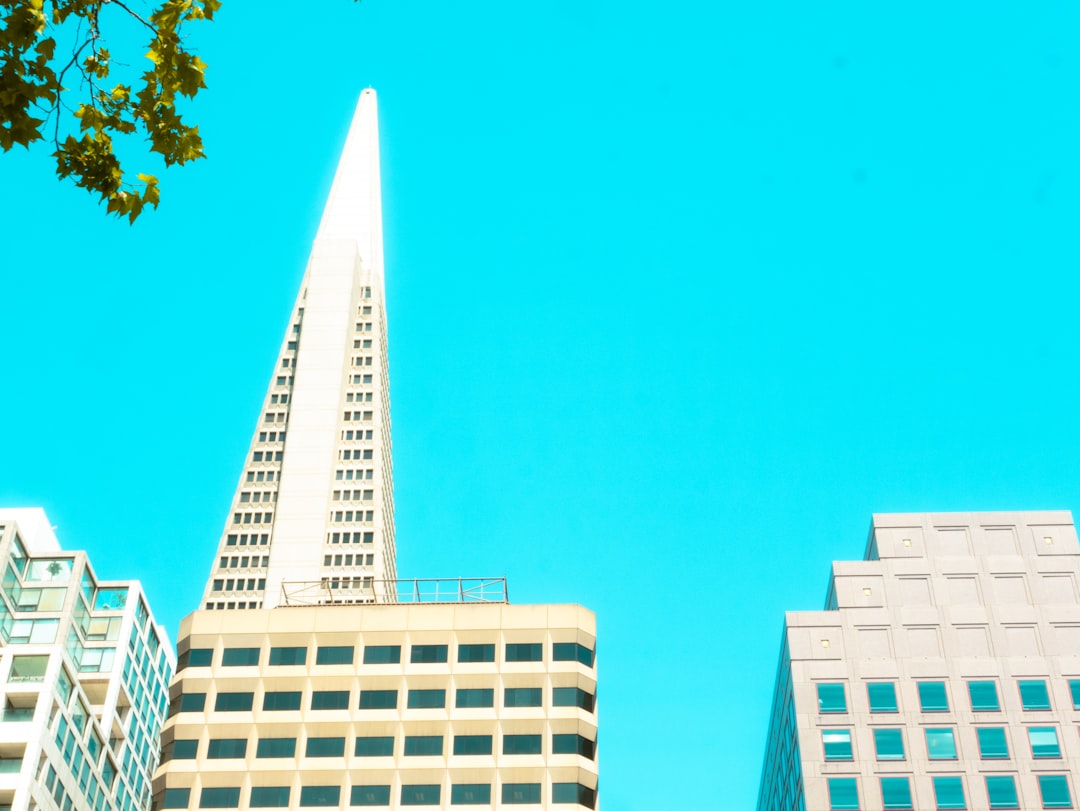
Look up. That pyramid. Forty-eight stories, eight hundred and fifty-three feet, the most recognizable building on the San Francisco skyline. When they announced it in nineteen sixty-nine, the city's own planner called it an inhumane creation. Dozens of Telegraph Hill residents protested wearing dunce caps. They served pyramid-shaped cake. Somebody printed Stop the Shaft bumper stickers.
Within a few years, everyone loved it.
But the building that used to stand here was better.
The Montgomery Block — locals called it the Monkey Block — was built on this exact spot in eighteen fifty-three. Four stories, block-square footprint, the largest building west of the Mississippi. Designed by Henry Halleck — who would later become general-in-chief of the Union Army during the Civil War. Everyone mocked his construction method. He hired three hundred Chinese laborers to dig a massive pit in the bay mud, then sunk enormous redwood rafts into it as a foundation. They called it Halleck's Folly. Th
e logs flexed with seismic movement instead of cracking. The building survived the eighteen fifty-one fires, fifty years of Barbary Coast chaos, and the nineteen oh-six earthquake. Everything around it burned. The Monkey Block stood.
On the ground floor — the Bank Exchange Saloon. Marble-tile floor, Wedgewood porcelain beer pumps, a solid mahogany bar. And behind that bar, a Scottish bartender na