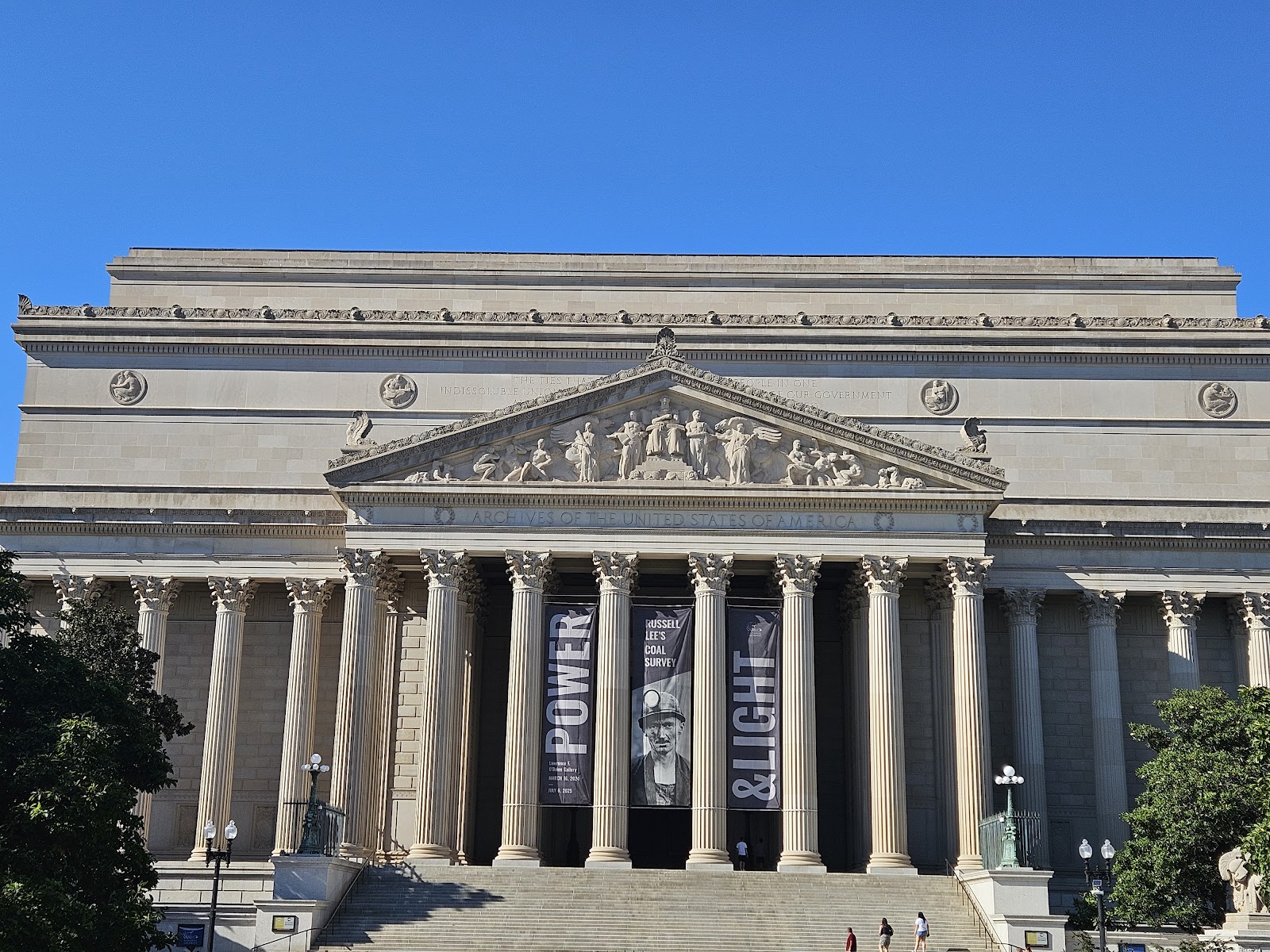
The National Gallery of Art. Seven hundred and eighty feet of Tennessee pink marble — when it opened, the largest marble structure in the world. And it exists because the richest man in America decided the best way to respond to a tax fraud prosecution was to donate everything.
Andrew Mellon. Pittsburgh banker. Net worth at death — about two hundred and eighty million dollars, which in today's money is roughly fifty billion. He was one of the richest men in America AND the Secretary of the Treasury — the guy setting the nation's tax policy. If that sounds like a conflict of interest, it was.
In the late nineteen twenties, Mellon learned that Stalin's Soviet Union was selling off masterpieces from the Hermitage to finance rapid industrialization. Raphaels, Rembrandts, Titians — all available to anyone with enough cash and discretion. Mellon had both.
Through a chain of secret intermediaries — Leningrad to Berlin to London to New York — Mellon bought twenty-one paintings. Total price
— six point six five million dollars. Including the Alba Madonna by Raphael, the most expensive painting purchase in history at that time. America's Secretary of the Treasury was secretly buying art from the communist Soviet Union. Both sides thought they got the better deal.
Then Franklin Roosevelt came to power. And he came for Mellon.
F-D-R's government charged Mellon with tax fraud — three m