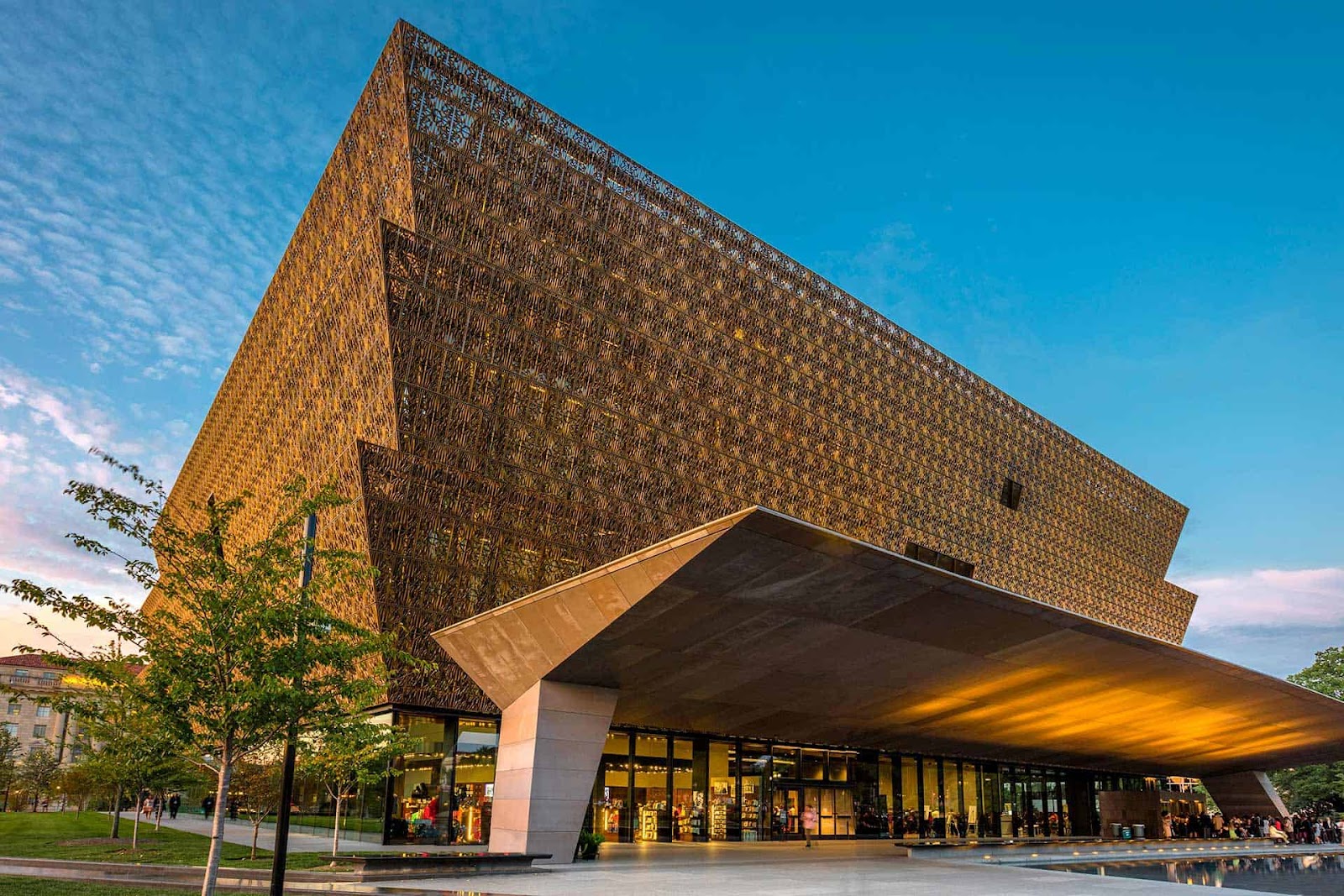
The National Museum of African American History and Culture. That building with the bronze lattice — three tiers stepping outward, sitting on the last available plot of land on the National Mall.
It took a hundred and one years to build.
Not the construction — that took four. The IDEA took a hundred and one years.
In nineteen fifteen, Black Civil War veterans gathered at a church in D-C for a reunion. These men had fought for the Union. Nearly been excluded from the victory parade. And they'd come home to a country that treated them as less than. They formed a committee. The committee became a memorial association. The association proposed a museum.
Congress said no. For decades.
In nineteen twenty-nine, they finally passed a bill — signed by President Coolidge — authorizing the memorial. The catch — it had to be privately funded. The year was nineteen twenty-nine. The stock market crashed. The fundraising died.
For the next fifty years, proposals appeared and disappeared in Cong
ress like ghosts.
Then, in nineteen eighty-eight, a congressman from Georgia named John Lewis introduced a bill. Lewis had crossed the Edmund Pettus Bridge at Selma. He'd been beaten nearly to death at twenty-five. He sat down with Congress and asked for a museum.
They said no. He introduced the bill again. And again. And again.
Fifteen times. Fifteen consecutive Congresses. Same bill. Same man