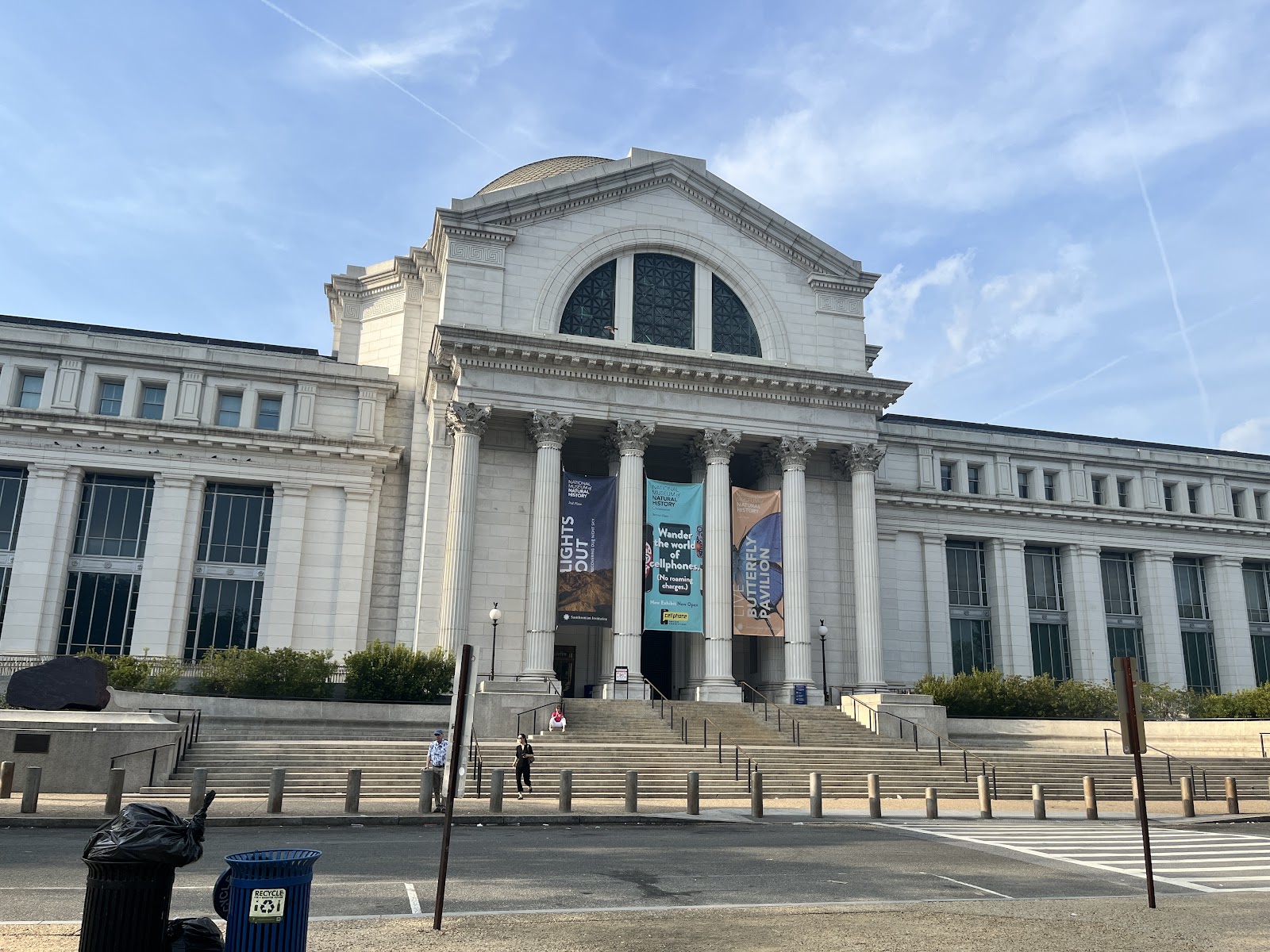
The National Museum of Natural History. That huge building with the columns. A hundred and forty-eight million specimens inside, and almost everybody who walks through those doors is heading for the same room. The gem gallery. To see a rock.
The Hope Diamond. Forty-five point five two carats, deep blue, currently the second-most-viewed museum object in the world after the Mona Lisa. If you shine ultraviolet light on it, it glows an angry red for about five minutes afterward. Like it's still mad about something.
Here's what that something might be.
In sixteen sixty-six, a French gem merchant named Jean-Baptiste Tavernier bought a massive blue diamond from a mine in India. Brought it back to France and sold it to King Louis the Fourteenth. According to legend, Tavernier stole the gem from the eye of a Hindu idol and was cursed by priests. He was later torn apart by wild dogs. Great story. Completely made up. Tavernier retired comfortably and died in Moscow at eighty-four, probably of
the flu. The temple theft was invented by nineteenth-century journalists selling newspapers.
But the owners of this diamond DO have a run of bad luck that's hard to ignore.
Louis the Fourteenth wore it and died of gangrene. Louis the Sixteenth and Marie Antoinette inherited it — both beheaded. During the French Revolution, thieves broke into the royal storehouse over five consecutive nights and